PVC rigid sheet, a versatile thermoplastic, plays a crucial role in modern industries worldwide. Its durability, cost-effectiveness, and resistance to various environmental factors have made it a preferred material for a vast array of applications, from construction and signage to packaging and medical devices. Understanding its properties and potential is key to optimizing its use and driving innovation across different sectors.
The global demand for pvc rigid sheet is steadily increasing, driven by growth in construction, infrastructure development, and consumer goods manufacturing, particularly in emerging economies. According to recent market analysis, the industry is projected to continue its upward trajectory, with a focus on sustainable production methods and the development of specialized formulations to meet evolving market needs. This growth underscores the importance of staying informed about the latest advancements and best practices in the field.
Addressing challenges in material sourcing, production efficiency, and end-of-life management are critical for ensuring the long-term viability of pvc rigid sheet as a sustainable building block for a multitude of applications. A deeper understanding of its lifecycle and responsible disposal methods will be essential for mitigating environmental impact and fostering a circular economy.
Introduction to pvc rigid sheet
PVC rigid sheet stands as a cornerstone material in countless industries due to its exceptional balance of properties. It's not merely a plastic; it's a highly engineered thermoplastic offering resistance to chemicals, weather, and impact, alongside a relatively low cost, making it incredibly versatile. The applications span diverse fields, cementing its importance in the modern world.
The inherent ease of fabrication – cutting, drilling, welding, and thermoforming – further enhances its appeal. This allows for custom designs and efficient production processes. Compared to materials like wood or metal, pvc rigid sheet often offers a lighter weight and improved durability, contributing to its popularity in demanding environments.
Defining pvc rigid sheet
Pvc rigid sheet, short for Polyvinyl Chloride rigid sheet, is a thermoplastic material produced through the polymerization of vinyl chloride monomer. Unlike flexible PVC, which incorporates plasticizers, rigid PVC maintains a high molecular weight and minimal plasticizer content, resulting in a strong, unbending material. This inherent rigidity is what defines its utility in structural and protective applications.
Its connection to modern industry lies in its ability to provide a cost-effective and durable alternative to traditional materials like wood, metal, and glass. From safeguarding sensitive goods during transport to constructing long-lasting signage, pvc rigid sheet addresses critical needs across various supply chains and infrastructural projects.
Furthermore, the production of pvc rigid sheet is a significant economic driver, supporting numerous jobs in manufacturing, distribution, and fabrication. Its widespread use contributes to improvements in sanitation, safety, and convenience, impacting the quality of life for individuals globally.
Core Properties of pvc rigid sheet
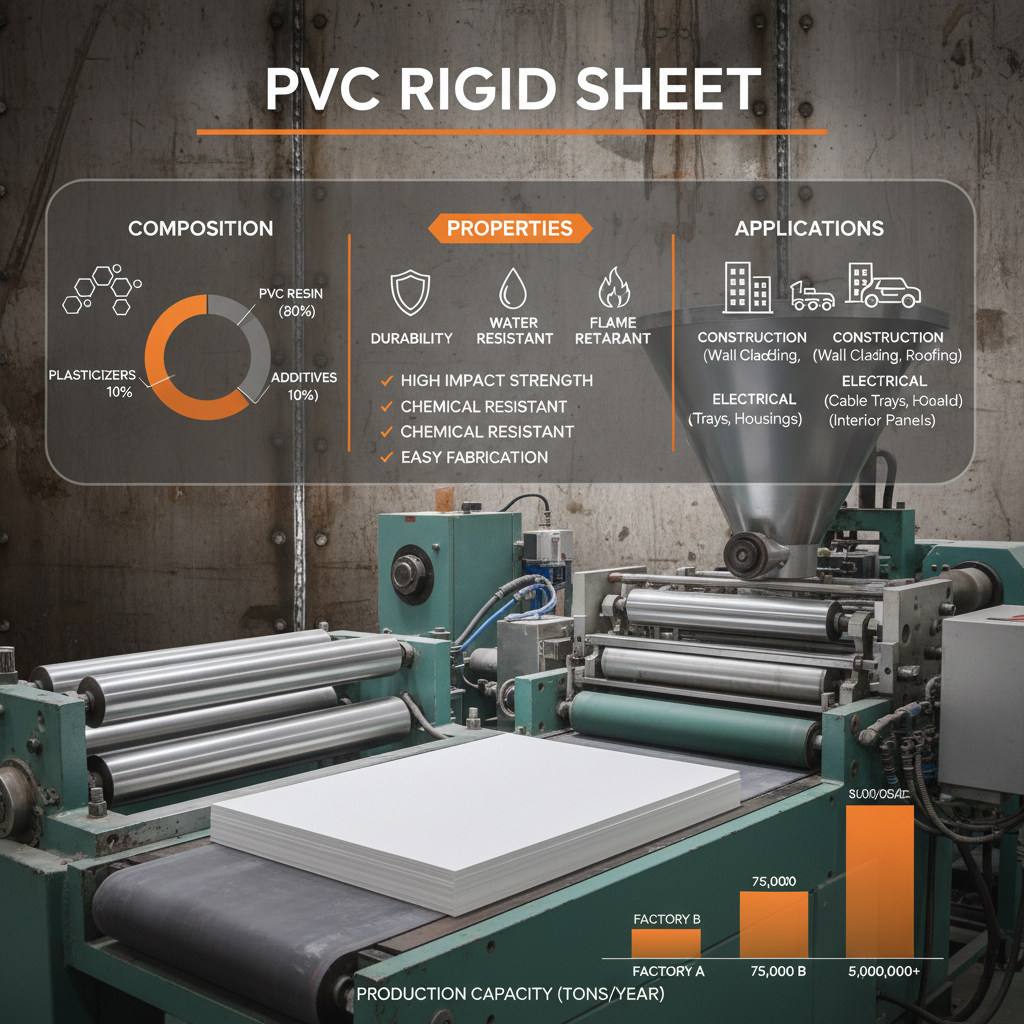
The defining characteristic of pvc rigid sheet is its impressive durability. It resists impacts, abrasions, and weathering, making it ideal for outdoor applications and environments where longevity is paramount. This robustness translates to lower maintenance costs and extended product lifecycles.
Crucially, pvc rigid sheet exhibits excellent chemical resistance. It’s unaffected by most acids, bases, and salts, making it suitable for use in corrosive environments like chemical processing plants or marine applications. This resistance protects not only the material itself but also the products or structures it safeguards.
Beyond durability and chemical resistance, pvc rigid sheet boasts inherent flame retardancy. While not self-extinguishing, it doesn’t readily ignite or contribute to fire spread, enhancing safety in building and construction applications. This property is particularly important in environments where fire safety is a critical concern.
Key Applications and Use Cases
Pvc rigid sheet finds extensive use in the construction industry, serving as a durable and weather-resistant material for siding, roofing, window profiles, and drainage systems. Its lightweight nature simplifies installation and reduces structural load. Additionally, it’s commonly used in the fabrication of doors and window frames, offering a cost-effective and long-lasting alternative to wood or metal.
The signage and display market heavily relies on pvc rigid sheet for creating durable and visually appealing signs, banners, and point-of-sale displays. Its smooth surface allows for high-quality printing, and its resistance to weathering ensures long-term visibility. From indoor retail displays to outdoor billboards, it provides a versatile solution.
Application Breakdown of pvc rigid sheet
Advantages and Long-Term Value
The most immediate advantage of using pvc rigid sheet is its cost-effectiveness. Compared to many alternative materials offering similar performance characteristics, it provides a significantly lower initial investment. This makes it attractive for projects with budget constraints.
Beyond initial cost, pvc rigid sheet offers long-term value through its durability and low maintenance requirements. Its resistance to weathering, chemicals, and impact reduces the need for frequent repairs or replacements, resulting in significant cost savings over its lifespan. This contributes to a lower total cost of ownership.
Future Trends and Innovations
Innovation in pvc rigid sheet is focused on enhancing its sustainability profile. Developments in bio-based PVC formulations and recycling technologies are gaining momentum, aiming to reduce reliance on fossil fuels and minimize waste. These advancements are crucial for aligning the material with circular economy principles.
Furthermore, research is underway to improve the material’s performance characteristics, such as increasing its impact resistance and enhancing its flame retardancy. Integration with smart technologies, like embedded sensors for structural health monitoring, is also being explored to unlock new applications.
Digitalization in manufacturing is leading to more precise control over the production process, resulting in consistent quality and reduced material waste. Automation and robotic systems are streamlining fabrication, improving efficiency and lowering costs.
Challenges and Solutions
One significant challenge associated with pvc rigid sheet is the environmental impact of its production and disposal. The use of chlorine and the potential for dioxin emissions during incineration are key concerns. Addressing these requires investment in cleaner production technologies and robust recycling infrastructure.
To mitigate these concerns, closed-loop recycling systems are being developed to recover and reuse PVC materials. Research into alternative stabilizers and plasticizers is also underway to reduce the environmental footprint. Encouraging responsible disposal practices and promoting the use of recycled content are essential steps.
Another challenge is the perceived lack of transparency in the supply chain. Implementing traceability systems and promoting responsible sourcing practices can build trust and ensure ethical production standards. Collaboration between manufacturers, recyclers, and policymakers is vital for driving sustainable improvements.
Summary of Challenges and Potential Solutions for pvc rigid sheet
| Challenge Area |
Specific Issue |
Severity (1-10) |
Potential Solution |
| Environmental Impact |
Chlorine Usage & Dioxin Emissions |
8 |
Cleaner Production Technologies, Efficient Incineration |
| Waste Management |
Low Recycling Rates |
7 |
Investment in Recycling Infrastructure, Design for Recyclability |
| Supply Chain |
Lack of Transparency |
6 |
Traceability Systems, Responsible Sourcing Certifications |
| Performance Limitations |
Limited High-Temperature Resistance |
5 |
Development of Modified PVC Formulations |
| Regulatory Compliance |
Varying Regulations Across Regions |
7 |
Harmonized Standards, Global Collaboration |
| Public Perception |
Negative Associations with PVC |
4 |
Increased Transparency, Education on Sustainable Practices |
FAQS
Pvc rigid sheet is extensively used in construction for various applications including window and door profiles, siding, roofing sheets, drainage pipes, and internal wall cladding. Its durability, weather resistance, and low maintenance requirements make it an ideal material for these uses. It offers a cost-effective alternative to traditional materials like wood and aluminum, contributing to faster construction times and reduced lifecycle costs.
While historically challenging, the recyclability of pvc rigid sheet has significantly improved. Dedicated recycling processes now allow for the recovery and reuse of pvc, though rates are still lower than some other plastics like PET or HDPE. However, advancements in chemical recycling technologies are promising to further enhance recycling rates and create a more circular economy for pvc, minimizing landfill waste.
Pvc rigid sheet is generally not considered suitable for direct food contact packaging due to concerns regarding potential migration of additives. However, it is often used for blister packs and protective packaging where it does not come into direct contact with the food item itself. Regulations surrounding food contact materials vary, so compliance must be verified based on specific applications and regional standards.
The lifespan of structures utilizing pvc rigid sheet components can vary depending on environmental conditions and maintenance practices, but generally ranges from 20 to 50 years or more. Its resistance to weathering, corrosion, and impact contribute to its longevity. Regular inspection and occasional cleaning can further extend its service life, making it a durable and long-term investment.
Pvc rigid sheet is typically more cost-effective than aluminum and comparable to, or slightly less expensive than, wood depending on the species and grade. While aluminum offers superior strength, pvc provides a better price-performance ratio for many applications. Wood can be aesthetically pleasing but requires more maintenance. The overall cost comparison depends on the specific application and lifecycle considerations.
The appropriate thickness of pvc rigid sheet depends on the application's structural requirements and expected load. Thicker sheets provide greater rigidity and strength, suitable for load-bearing applications like structural components. Thinner sheets are sufficient for signage, displays, and non-load-bearing cladding. Consider factors such as span length, wind load, and potential impact forces when selecting the appropriate thickness.
Conclusion
In conclusion, pvc rigid sheet remains an indispensable material in a multitude of industries, offering a unique combination of durability, cost-effectiveness, and versatility. From construction and signage to packaging and medical applications, its properties enable innovative solutions and contribute to improved efficiency across various sectors. Addressing environmental challenges through sustainable production and recycling practices is vital for its long-term viability.
Looking ahead, continued innovation in materials science and manufacturing processes will further enhance the performance and sustainability of pvc rigid sheet. Embracing circular economy principles, investing in recycling infrastructure, and promoting responsible sourcing practices will be crucial for unlocking its full potential and ensuring its continued relevance in a rapidly evolving world. For more information and to explore our range of pvc rigid sheet products, visit our website: www.lidaplastic.com