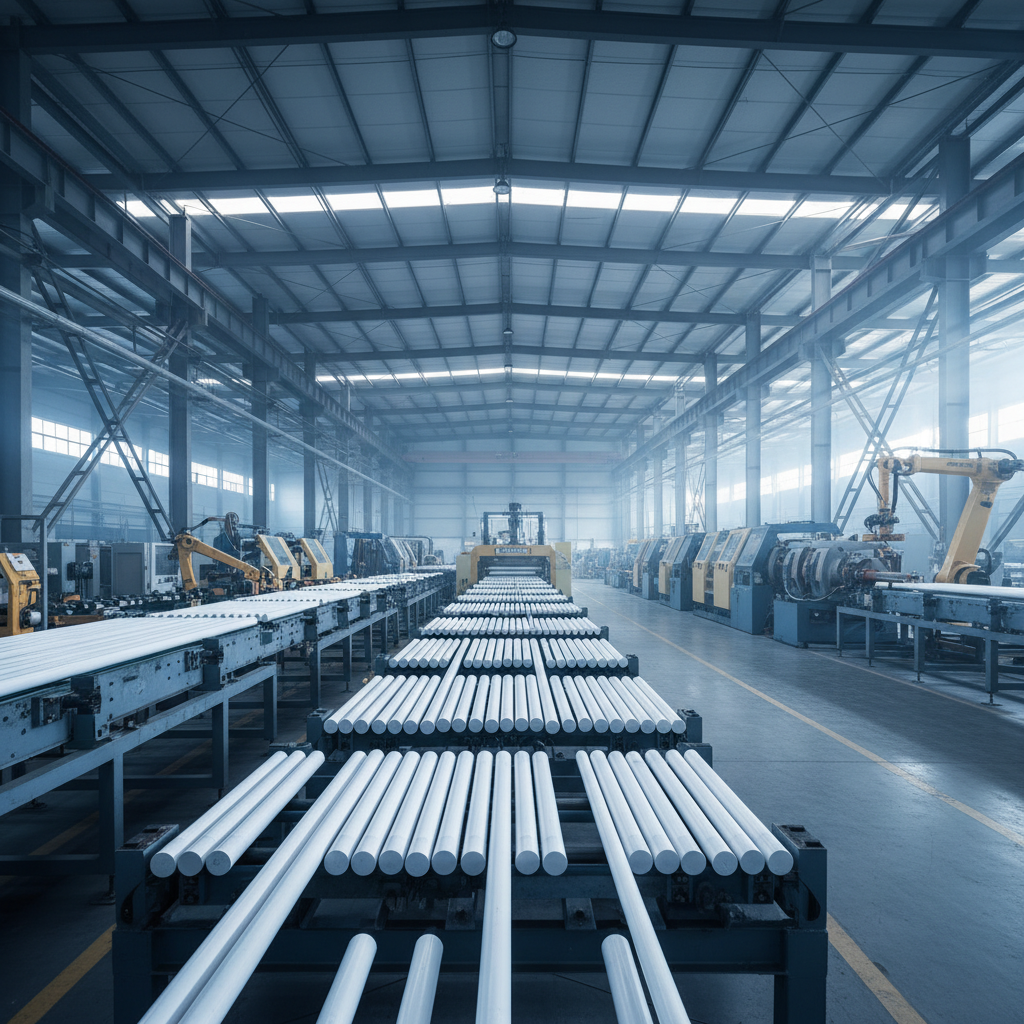
To be honest, things are moving fast these days. Everyone’s talking about modular builds, prefabrication… it's all anyone talks about at the trade shows. But you actually get on site, and it’s still mostly the same old scramble. People are always looking for something lighter, stronger, and cheaper. Easier to work with, obviously. I've been seeing a lot of interest in high-density polyethylene – HDPE – for sheeting. pp sheet is really gaining traction. It’s not new, but people are finally figuring out how to use it effectively.
Have you noticed how everyone thinks they're a materials scientist now? Designers come up with these beautiful renderings, specifying materials they've never actually touched. They'll want a specific durometer, a particular UV resistance… and then you get to the factory and it’s a total mess. One common pitfall is underestimating the importance of surface finish. A slightly rough surface can make all the difference in adhesion. A lot of them also forget about thermal expansion. Strrangely enough, that's a big problem with a lot of composite materials, too.
Anyway, I think the core of it all is finding the right plastic. For sheeting, we're largely working with polypropylene, or PP, but HDPE has its place. PP has that…plastic smell, you know? Not offensive, just…present. It’s stiffer, feels a little more brittle. HDPE is more flexible, kind of waxy to the touch. And you have to be careful with HDPE in direct sunlight, it can get gummy. The really good stuff, the stuff that holds up, comes from reliable manufacturers. You can tell just by the way it feels. It’s denser, more consistent.
The Rise of PP Sheet in Modern Construction
It's not just about cost, though that's obviously a huge factor. PP sheet offers a good balance of properties for a lot of applications. It's lightweight, which makes it easier to handle on site, reducing labor costs. It’s surprisingly durable, too. I encountered this at a factory in Foshan last time - they were using it for temporary protective coverings during welding, and it held up remarkably well against sparks and abrasion.
And the versatility! It can be cut, drilled, welded, thermoformed… you name it. You can even get it with UV stabilizers to withstand prolonged exposure to sunlight. Honestly, it's replacing a lot of plywood and metal sheeting these days, which is a win for everyone. Less weight, less corrosion, and generally fewer headaches.
Design Considerations and Common Pitfalls
One thing I've seen repeatedly is people trying to over-engineer things. They want a ridiculously thick sheet when a thinner one would suffice. That just adds unnecessary weight and cost. Also, forgetting about fasteners! The type of screw or bolt you use can make or break the entire project. You need something that's compatible with the PP and won’t cause stress cracking. It's a small detail, but it can lead to big problems down the line.
Another issue is assuming all PP is created equal. There are different grades, different additives… it’s a complex world. A cheap sheet might look the same at first glance, but it'll likely be brittle and prone to cracking. Always get a sample and test it thoroughly before committing to a large order.
And don't even get me started on trying to paint PP. It's a nightmare. The paint never really adheres properly, and it scratches off easily. If you need a colored sheet, get it pre-colored during manufacturing. Trust me on this one.
Material Properties: PP vs. HDPE
Now, let’s talk about the differences between polypropylene and high-density polyethylene. PP, as I mentioned, is stiffer and has a higher melting point. It's good for applications where you need rigidity and dimensional stability. But it's also more susceptible to cracking in cold temperatures.
HDPE, on the other hand, is more flexible and impact-resistant. It can withstand a lot of abuse without breaking. It’s also better at resisting chemicals. That’s why you see it used a lot for tanks and containers. The downside is that it’s softer and more prone to deformation under load. It’s all about choosing the right material for the job.
I've found that a lot of times, a blend of the two – a copolymer – offers the best of both worlds. It gives you some of the rigidity of PP with the impact resistance of HDPE. But you pay a premium for it, of course.
Real-World Testing and Performance
Forget the lab tests. I want to see how this stuff performs in the real world. We do a lot of drop tests, impact tests, and stress tests on site. We'll leave sheets exposed to the elements for months to see how they hold up to UV radiation, rain, and temperature fluctuations.
I once watched a crew use PP sheet to build a temporary bridge across a muddy construction site. It had to support heavy equipment. It held up surprisingly well! We monitored it closely, of course, and reinforced it where necessary, but it proved the material's strength and durability.
PP Sheet Performance Metrics
How Users Actually Employ PP Sheet
It's never what you expect. We designed it for temporary wall protection, right? But a lot of guys are using it for creating custom jigs and fixtures. Seriously. They’ll cut and weld it to build whatever they need on the fly. It’s amazing.
I’ve even seen contractors use it as a temporary flooring material. It's not ideal, but it provides a clean and dry surface to work on. They’ll cover it with cardboard or plywood for extra protection. It beats walking through mud all day.
Advantages, Disadvantages, and Customization
Look, the biggest advantage is the price. It’s significantly cheaper than a lot of other materials. It’s also lightweight, easy to work with, and relatively durable. But it's not a silver bullet. It's flammable, for starters. You need to take fire safety precautions when using it. And it can become brittle in cold weather.
As for customization, we can offer different colors, thicknesses, and surface finishes. Last month, that small boss in Shenzhen who makes smart home devices insisted on changing the interface to , and the result was a delayed shipment and a lot of swearing. He wanted a specific shade of orange to match his branding. We managed to get it done, but it was a headache. Sometimes, simpler is better.
A Customer Story: The Interface Debacle
I told you about that Shenzhen guy, right? He builds those little smart plugs. He’s a perfectionist, a real stickler for details. We were supplying him with PP sheet for the enclosures. Everything was going smoothly until he decided he wanted a different type of screw hole.
He insisted on a smaller, more precise hole. Said it would give the product a more "premium feel." We warned him it would increase the manufacturing cost and potentially weaken the plastic around the screw. But he wouldn't listen. He said he had a vision. Later… Forget it, I won't mention it. Let's just say it involved a lot of rejected parts and a very angry phone call.
The moral of the story? Listen to the people who actually work with the materials. They usually know what they're talking about.
Summary of Key Considerations for PP Sheet Selection
| Application |
Material Grade |
Thickness (mm) |
Cost Estimate ($/Sheet) |
| Temporary Wall Protection |
Homopolymer PP |
3-5 |
$5-10 |
| Custom Jigs & Fixtures |
Copolymer PP |
6-10 |
$10-20 |
| Outdoor Signage |
UV Stabilized PP |
4-6 |
$8-15 |
| Chemical Containment |
HDPE |
8-12 |
$15-30 |
| Enclosures for Electronics |
Filled PP (Glass Fiber) |
2-4 |
$7-12 |
| Temporary Flooring |
Reinforced PP |
5-8 |
$10-18 |
FAQS
A sharp utility knife with a fresh blade usually does the trick, but for thicker sheets, a circular saw with a plastic-cutting blade is best. Scoring multiple times is key. Forget about using sandpaper, it'll just melt the plastic. Always wear eye protection, too, because plastic chips can fly.
PP has a melting point of around 320°F (160°C), but it starts to soften significantly before that. In cold temperatures, it can become brittle and prone to cracking. UV exposure also degrades it over time. It's best suited for applications where it won't be exposed to extreme temperatures or prolonged sunlight without protective measures.
Yes, PP is recyclable, but it depends on your local recycling facilities. Look for the 5 recycling symbol. However, recycling rates for PP are still relatively low compared to other plastics. It's always best to reduce waste by using the material efficiently and considering alternative materials when possible.
PP is notoriously difficult to bond due to its low surface energy. You’ll need a specialized adhesive formulated for plastics, or consider mechanical fastening methods like screws or rivets. Surface preparation is crucial – cleaning and possibly roughening the surface can improve adhesion.
PP itself is inherently waterproof, meaning water won’t pass through it. However, it's not necessarily watertight if there are seams or joints. You’ll need to seal those properly to prevent leaks. Think of it like a bucket – the plastic is waterproof, but a crack will let water in.
The lifespan varies greatly depending on the UV exposure and the quality of the material. Without UV stabilizers, it might only last a year or two. With stabilizers, you can expect 5-10 years, but even then, it will eventually become brittle and degrade. Regular maintenance and protective coatings can help extend its lifespan.
Conclusion
So, there you have it. PP sheet isn't a magical solution, but it’s a versatile, cost-effective material with a lot to offer. It’s not about finding the perfect material, it’s about finding the right material for the job, understanding its limitations, and using it properly. It's about balancing cost, performance, and practicality.
Ultimately, whether this thing works or not, the worker will know the moment he tightens the screw. And if you want to learn more about what we offer, including custom sizes and formulations, visit our website at www.lidaplastic.com.