The industrial landscape has been significantly transformed by the versatility of high-performance polymers, with the pvc round rod emerging as a cornerstone for precision engineering and structural fabrication. From automotive components to intricate chemical apparatus, these cylindrical profiles provide a unique balance of rigidity and machinability that few other materials can match.
Understanding the nuances of PVC (Polyvinyl Chloride) in its rod form is essential for procurement managers and engineers who aim to optimize costs without sacrificing structural integrity. The ability to easily cut, drill, and weld these rods makes them an indispensable asset in the rapid prototyping and final production phases of modern manufacturing.
Globally, the demand for pvc round rod continues to grow as industries pivot toward materials that offer superior corrosion resistance and electrical insulation. This guide explores the technical depths, practical applications, and future innovations surrounding this vital industrial component to help you make informed material choices.
Global Industry Context of PVC Round Rod
In the current global economy, the plastics industry is under immense pressure to provide materials that are both sustainable and high-performing. The pvc round rod has become a primary solution for replacing traditional metal rods in environments where oxidation and corrosion are prevalent. According to ISO standards for plastics, the consistency of extruded PVC profiles ensures that global supply chains can maintain interchangeable parts across different continents.
The primary challenge facing the industry has been the transition from heavy-metal infrastructure to polymer-based systems. By integrating PVC round rods, companies have reduced the dead weight of their machinery, leading to lower energy consumption during operation and easier installation in remote industrial zones where heavy lifting equipment is unavailable.
Defining the Technicality of PVC Round Rod
At its core, a pvc round rod is a solid, cylindrical extrusion made from polyvinyl chloride, a synthetic plastic polymer. Unlike hollow piping, the solid nature of the rod provides significant compressive strength and a dense cross-section that is ideal for machining into bushings, spacers, and rollers.
This material is deeply connected to modern humanitarian and industrial needs, particularly in the creation of affordable, corrosion-resistant water treatment components and medical device housings. Its inherent biocompatibility (in specific grades) and resistance to chemical degradation make it a safe choice for critical infrastructure.
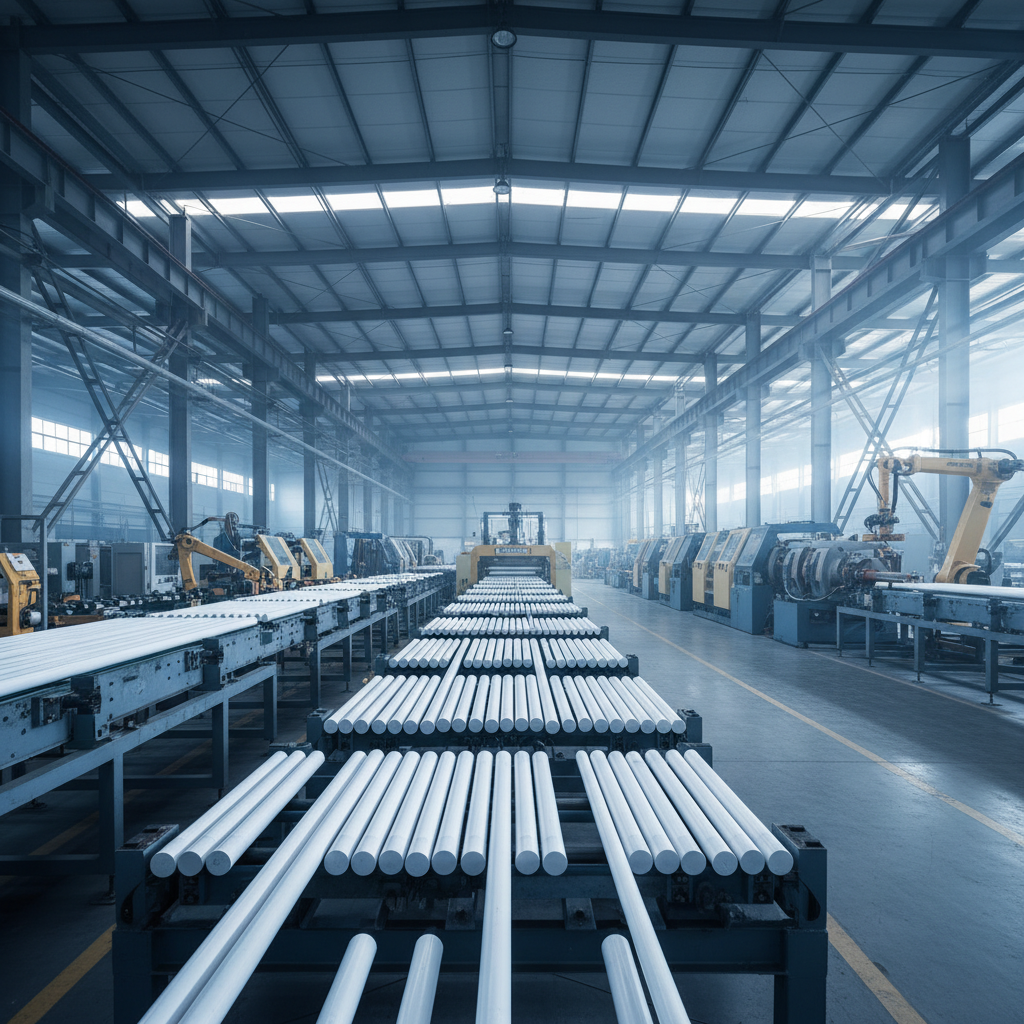
From a manufacturing perspective, these rods are typically produced through a continuous extrusion process, ensuring that the diameter remains constant over long lengths. This precision is what allows the pvc round rod to be used in high-tolerance engineering applications where a fraction of a millimeter can determine the success of a seal or fit.
Core Components and Performance Factors
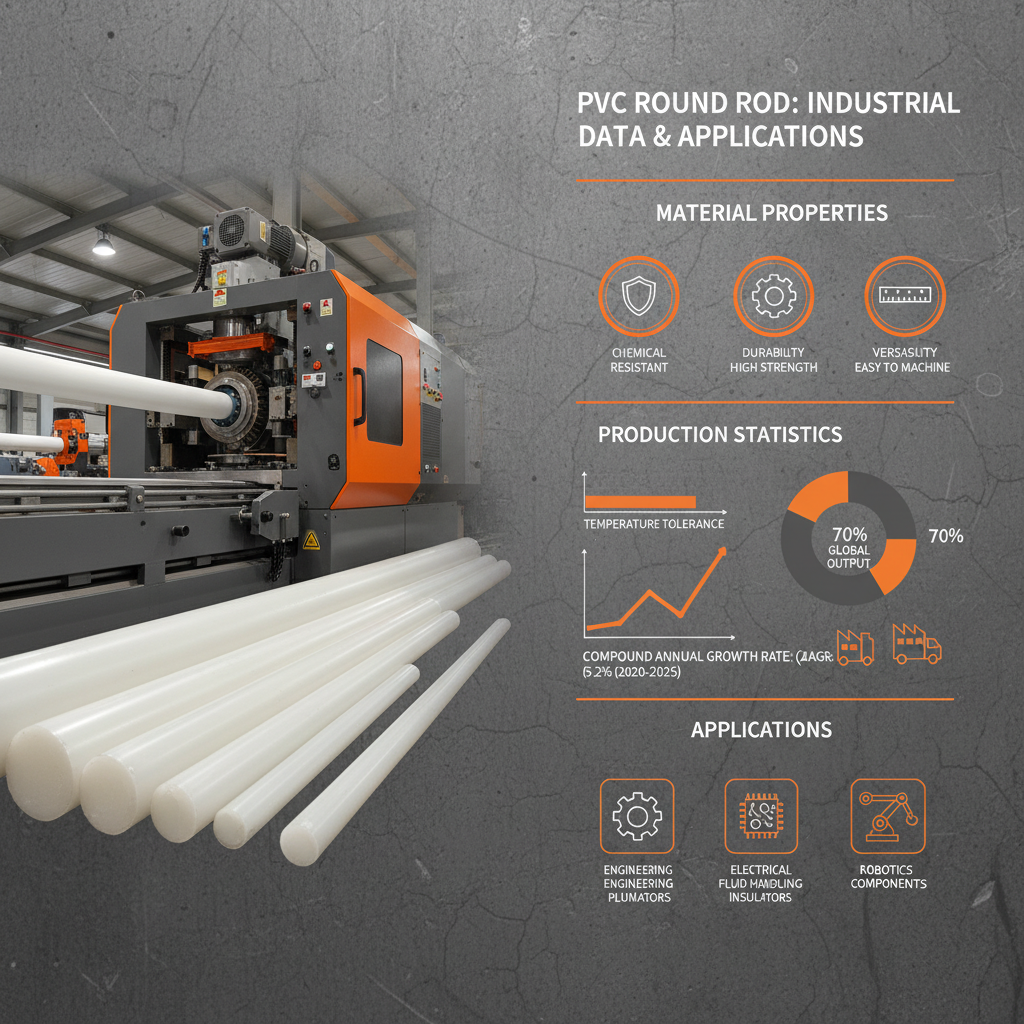
Chemical Inertness is perhaps the most critical factor of the pvc round rod. Its ability to withstand a wide array of acids, bases, and salts ensures that components do not degrade when exposed to harsh industrial cleaning agents or chemical processing fluids, extending the lifecycle of the equipment.
Machinability allows the pvc round rod to be processed using standard metal-working tools. This means engineers can turn, mill, and drill the material to create complex geometries without the need for expensive specialized molding for every small batch of parts, drastically reducing lead times.
Electrical Insulation remains a key driver for the adoption of these rods in the electronics and power sectors. Because PVC is a non-conductive material, the pvc round rod serves as an ideal insulator for high-voltage components, preventing electrical arcs and ensuring operator safety in complex circuitry.
Global Applications and Strategic Use Cases
In real-world contexts, the pvc round rod is deployed across a vast array of sectors. In the chemical processing industry in Europe and North America, these rods are machined into custom valves and fittings that must resist corrosive reagents. In Southeast Asia, they are frequently used in the construction of aquaculture systems, where resistance to saltwater is paramount for longevity.
Beyond heavy industry, these materials play a role in specialized relief operations. For example, in post-disaster relief operations, PVC components are used to quickly assemble modular water filtration frames that are lightweight enough to be transported by air but sturdy enough to withstand rugged field use.
Performance Comparison of PVC Round Rod Variants
Tangible Advantages and Long-Term Value
The long-term value of utilizing a pvc round rod lies in the drastic reduction of maintenance overhead. Unlike steel or aluminum, PVC does not rust, meaning that parts installed in humid or corrosive environments do not require expensive coatings or frequent replacement, offering a lower Total Cost of Ownership (TCO).
From an emotional and psychological standpoint, the use of high-quality PVC provides peace of mind through reliability. When an engineer specifies a pvc round rod for a critical seal in a water treatment plant, they are investing in a solution that guarantees safety and dignity for the end-users by preventing leaks and contamination.
Future Trends and Material Innovations
The future of the pvc round rod is being shaped by the push toward a circular economy. We are seeing the rise of bio-based plasticizers and recycled PVC content that maintain the same mechanical properties as virgin material, allowing companies to meet strict ESG (Environmental, Social, and Governance) goals without sacrificing quality.
Digital transformation is also impacting the way these rods are utilized. With the advent of high-precision CNC machining and 3D scanning, the conversion of a raw pvc round rod into a complex component is becoming faster and more accurate, reducing material waste through optimized cutting paths.
Furthermore, innovations in additive manufacturing are leading to "hybrid" rods, where PVC is reinforced with carbon fibers or other nano-materials to increase tensile strength. This evolution ensures that the pvc round rod remains relevant even as the demands of aerospace and high-tech robotics increase.
Overcoming Challenges in PVC Implementation
Despite its benefits, one common limitation of the pvc round rod is its sensitivity to extreme temperatures. At very high temperatures, PVC can soften, and at extremely low temperatures, it may become brittle. To solve this, experts recommend using CPVC (Chlorinated PVC) for high-heat environments or blending PVC with impact modifiers for cryogenic applications.
Another challenge is the perception of environmental impact. The industry is overcoming this by implementing closed-loop recycling systems where off-cuts from pvc round rod production are reground and reintegrated into the manufacturing process, minimizing the carbon footprint of each unit produced.
Lastly, achieving perfect weld strength in thick-walled rods can be difficult. The solution lies in the use of specialized pvc welding rod and precision heat-welding equipment, ensuring that the joint is as strong as the parent material, thus maintaining the structural integrity of the final assembly.
Analysis of PVC Round Rod Material Specifications and Performance
|
Material Grade
|
Chemical Resistance
|
Tensile Strength (MPa)
|
Primary Use Case
|
| Industrial Grade |
High |
50-55 |
General Machining |
| CPVC Grade |
Very High |
60-65 |
Hot Water Systems |
| UV-Stabilized |
Medium |
45-50 |
Outdoor Signage |
| Medical Grade |
High |
50-52 |
Lab Equipment |
| High-Impact |
Medium |
55-60 |
Protective Guards |
| Clear PVC |
Medium |
40-45 |
Visual Indicators |
FAQS
A pvc round rod is a solid extrusion, whereas a pipe is hollow. This makes the rod significantly stronger in terms of compressive strength and allows it to be machined into solid components like rollers or spacers. While pipes are optimized for fluid transport, rods are designed for structural support and precision machining.
Standard PVC can degrade under prolonged UV exposure, leading to discoloration and brittleness. However, UV-stabilized pvc round rods are specifically formulated with additives that protect the polymer chain from ultraviolet radiation, making them ideal for outdoor industrial use.
To prevent cracking or melting, use sharp cutting tools and maintain a moderate feed rate. It is crucial to avoid excessive heat buildup at the cutting edge; using a lubricant or coolant can help maintain a smooth surface finish and prevent the material from warping during the machining process.
While highly resistant to most acids and bases, PVC can be dissolved or softened by certain strong solvents like acetone, MEK, or tetrahydrofuran (THF). Always consult a chemical compatibility chart before using pvc round rods in an environment containing volatile organic solvents.
The most effective method is solvent welding using a dedicated pvc welding rod and a compatible solvent cement. This creates a chemical bond that fuses the two pieces into one continuous piece of plastic, ensuring the joint is as strong as the rod itself.
Yes, many manufacturers now offer recycled PVC rods or those made with bio-based plasticizers. These options significantly reduce the environmental footprint while maintaining the necessary mechanical properties for industrial applications, supporting a more sustainable manufacturing cycle.
Conclusion
The pvc round rod stands as a testament to the efficiency of polymer engineering, offering an unparalleled combination of chemical resistance, electrical insulation, and ease of fabrication. By replacing traditional metals in corrosive environments, these rods not only reduce operational costs but also increase the safety and lifespan of critical industrial infrastructure globally.
As we move toward a future defined by sustainability and precision, the evolution of PVC materials through UV stabilization and circular recycling will only enhance their value. We recommend that engineers and procurement specialists prioritize high-grade, certified extrusions to ensure maximum reliability in their applications. For more information on high-performance PVC solutions, visit our website: www.lidaplastic.com