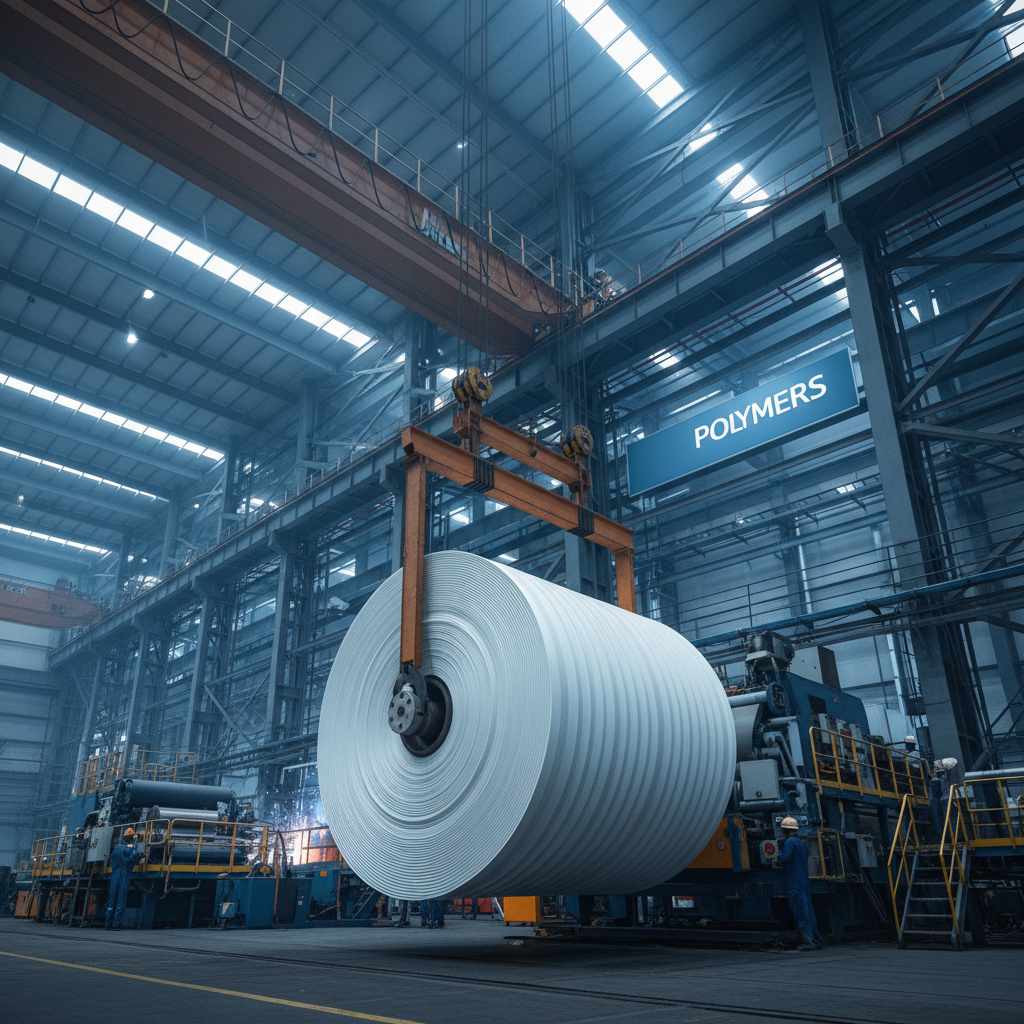
The industrial demand for high-stability polymers has led to a significant increase in the deployment of china thick pvc rigid sheet across chemical processing and construction sectors. As engineering requirements shift toward materials that can withstand extreme chemical corrosion while maintaining structural integrity, the selection of rigid PVC has become a critical decision for plant managers and system designers.
The primary challenge lies in balancing thickness with material stability. In heavy-duty applications, such as erosion-resistant flooring or chemical tank liners, a sheet that is too thin may fail under mechanical stress, while improper fabrication of thick sheets can lead to internal tension and warping. This technical trade-off necessitates a deeper understanding of material properties and manufacturing standards to ensure long-term reliability in hazardous environments.
This analysis explores the technical specifications, application logic, and selection frameworks for heavy-duty rigid PVC, providing engineers with the data needed to optimize material performance. For those seeking flexible alternatives for specific sealing or curtain needs, exploring the properties of china thick pvc rigid sheet variants can provide a comprehensive view of PVC versatility.


The structural integrity of a rigid PVC sheet is derived from its high molecular weight and the specific extrusion process used during manufacturing. Unlike flexible PVC, the rigid variant contains minimal plasticizers, resulting in a dense polymer matrix that provides superior strength and dimensional stability.
When producing a china thick pvc rigid sheet, the extrusion temperature and cooling rates must be precisely controlled to prevent the formation of internal voids or residual stress, which could lead to cracking during thermoforming or fabrication.
Key technical parameters for thick rigid sheets include tensile strength, flexural modulus, and impact resistance. High rigidity is essential for applications where the sheet must act as a load-bearing partition or a protective barrier against mechanical abrasion.
Low flammability and moisture resistance are critical specifications for construction materials. A high-quality rigid sheet must maintain its shape under fluctuating thermal conditions, ensuring that the expansion coefficient does not compromise the seals or joints of the installation.
Furthermore, the surface finish—whether glossy, matt, or embossed—impacts the material's interaction with other components. For instance, an embossed surface may be preferred in flooring applications to increase friction and safety, while a glossy surface is ideal for chemical environments to facilitate easy cleaning.
Rigid PVC is widely recognized for its excellent chemical and corrosion resistance, making it a primary choice for the lining of erosion-resistant equipment. Its non-polar nature prevents many acids and bases from penetrating the material surface.
However, engineers must be aware of the material's limitations regarding aromatic hydrocarbons and certain ketones, which can cause swelling or softening. Proper material verification against the specific chemical agents used in the process is mandatory to avoid premature failure.
Evaluating the performance of polymer sheets requires a normalized approach to compare different thickness profiles and additives. Metrics such as the "Rigidity-to-Weight Ratio" help engineers determine the minimum thickness required to meet structural loads without adding unnecessary mass to the system.
The following chart provides a relative engineering assessment of common PVC properties based on industry-standard performance profiles for rigid configurations.
A representative engineering scenario involves the installation of rigid PVC sheets as electrical insulation floors in battery assembly plants. In this context, the material must provide high dielectric strength while resisting the mechanical wear of foot traffic and equipment movement.
Another typical deployment is found in the food and medical industries, where the non-toxic and moisture-resistant properties of the material ensure compliance with hygiene standards. The ease of thermoforming allows these sheets to be custom-molded into complex shapes for equipment housings or protective shielding.
The industry is currently seeing a shift toward UV-stabilized and fire-retardant additives to extend the service life of PVC in outdoor and high-risk environments. These modifications prevent the polymer chains from breaking down under solar radiation and reduce the heat release rate during fire events.
R&D directions are also focusing on the integration of recycled polymers without compromising the structural rigidity of the sheet. This evolution is driven by global regulatory pressure to reduce the environmental footprint of plastic manufacturing.
Future engineering requirements will likely demand "intelligent" sheets with embedded sensing capabilities or enhanced self-healing properties to detect structural fatigue in critical industrial liners before a failure occurs.
Choosing the correct configuration requires a detailed comparison of the operational environment and the expected mechanical load. A standard rigid sheet may suffice for simple partitions, but high-duty configurations are necessary for chemical containment.
The matrix below provides a framework for selecting the appropriate PVC profile based on common industrial application needs.
Buyers should verify specific tolerances and certification requirements, such as ISO9001, to ensure the material meets the safety standards of their specific jurisdiction.
| Configuration Type | Primary Property | Stability Factor | Recommended Use Case |
|---|---|---|---|
| Basic Rigid | Moderate Strength | Standard | General Dividers |
| High-Duty Rigid | Superior Rigidity | High | Industrial Flooring |
| UV-Stabilized | Radiation Resistant | High (Outdoor) | External Shielding |
| Fire-Retardant | Low Flammability | Thermal-Stable | Electrical Rooms |
| Anti-Static | Charge Dissipation | Electronic-Safe | Cleanrooms |
| Chemical-Grade | Corrosion Resistant | Chemical-Stable | Tank Linings |
The fundamental difference lies in the use of plasticizers. Rigid PVC contains little to no plasticizer, resulting in a high-modulus material with superior strength and dimensional stability, ideal for structural components. Soft PVC is formulated with plasticizers to increase flexibility and elasticity, making it suitable for gaskets, curtains, and seals. The choice depends on whether the application requires structural support or adaptability to shape.
Increased thickness enhances structural strength but requires higher temperatures and longer dwell times during thermoforming to ensure uniform heat distribution. If the heating is uneven, thick sheets can develop internal stresses that lead to warping or cracking. Proper annealing processes are often required for very thick sheets to relieve these stresses before final machining or installation.
While highly resistant to most acids, alkalis, and salts, rigid PVC is susceptible to degradation when exposed to strong organic solvents such as acetone, methyl ethyl ketone (MEK), and certain aromatic hydrocarbons like benzene or toluene. These substances can cause the polymer to soften, swell, or dissolve. Always consult a chemical compatibility chart before using PVC in solvent-rich environments.
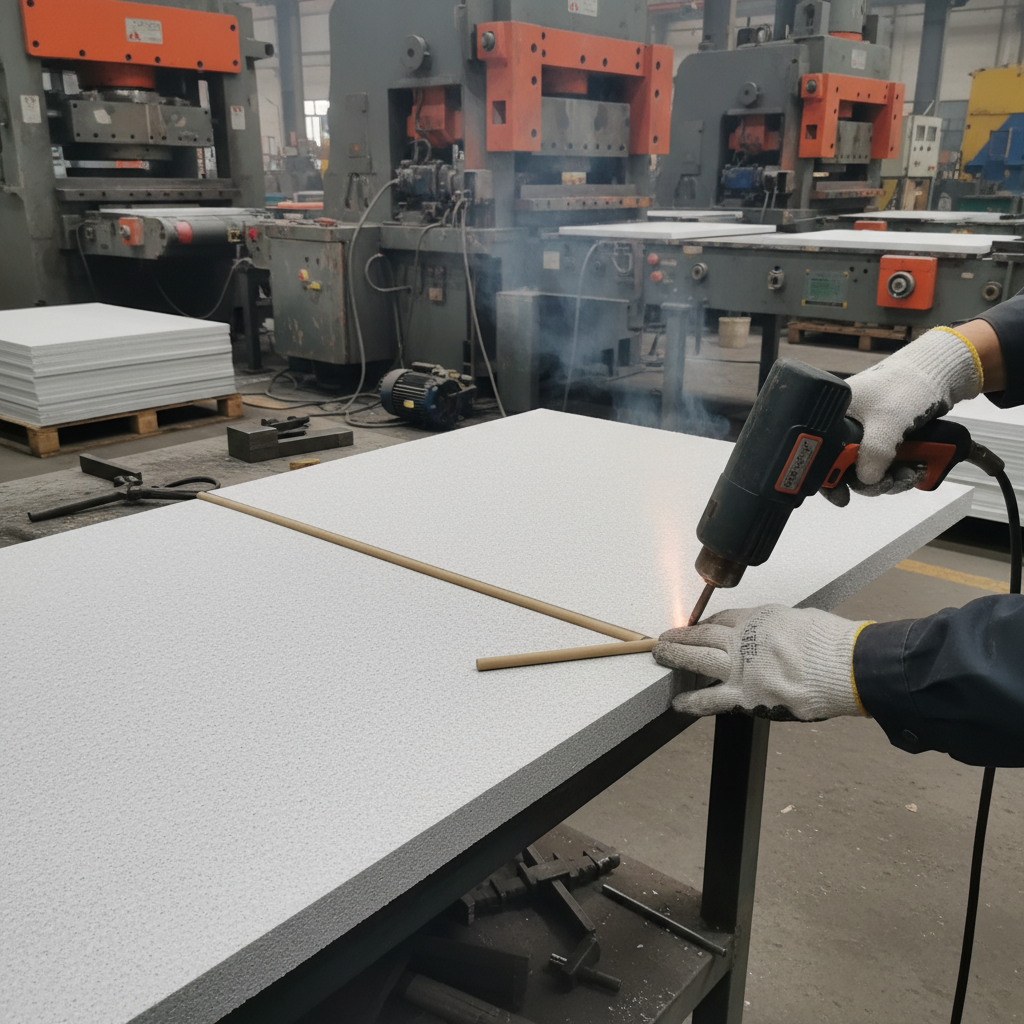
Yes, rigid PVC can be joined using hot air welding or solvent welding. Hot air welding involves using a PVC welding rod and a heat gun to create a fused, homogenous joint that maintains the strength of the base material. Solvent welding uses a chemical agent to partially dissolve the surfaces, creating a chemical bond upon evaporation. The choice depends on the required joint strength and the presence of chemicals in the environment.
Thickness selection should be based on a risk assessment of mechanical impact and the aggressiveness of the chemicals involved. For light splash protection, 2-5mm may be sufficient. For areas with heavy equipment movement or high abrasive wear, thicknesses of 10mm or more are recommended. Engineers should also consider the frequency of replacement and the criticality of the protected asset to determine the optimal balance between cost and longevity.
Standard PVC can undergo photodegradation when exposed to prolonged UV radiation, leading to discoloration (yellowing) and increased brittleness. To mitigate this, UV-stabilized grades are produced by adding titanium dioxide or other stabilizers that absorb or reflect UV rays. For any outdoor application, specifying UV-stabilized rigid PVC is essential to maintain the material's impact strength and aesthetic appearance over time.
The strategic deployment of rigid PVC sheets depends on a precise alignment between material grade, thickness, and the operational environment. By prioritizing chemical compatibility and mechanical load requirements over simple cost metrics, engineers can significantly reduce the lifecycle cost of industrial installations through decreased downtime and maintenance.
Ultimately, the transition toward stabilized and specialty rigid polymers ensures that critical infrastructure remains resilient against corrosion and mechanical failure. For detailed procurement and technical support regarding high-performance polymers, visiting www.lidaplastic.com/pvc-soft-sheet.html can provide further insights into material selection and customization options.