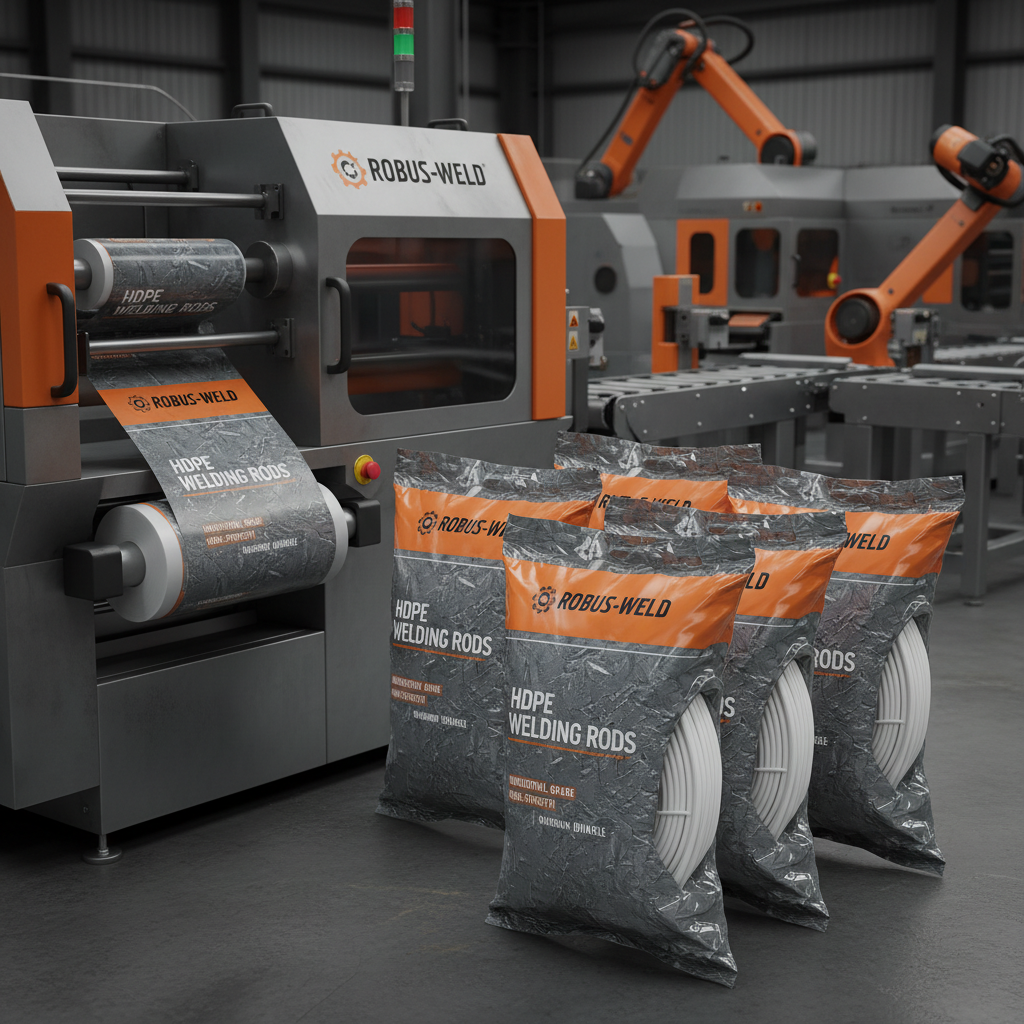
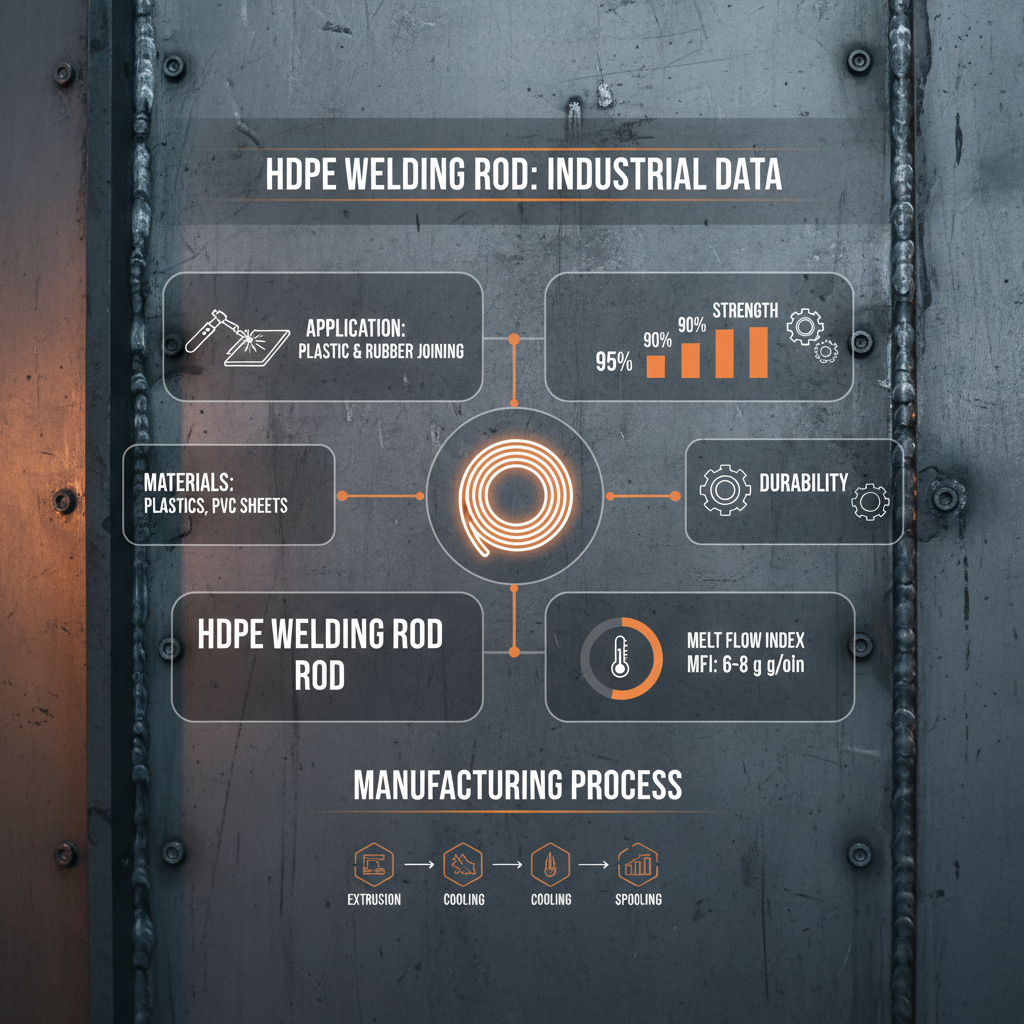
In the world of modern industrial piping and tank fabrication, the integrity of a joint is only as strong as the material used to fuse it. The hdpe welding rod serves as the essential filler material that ensures leak-proof, high-pressure resistant connections in High-Density Polyethylene systems, playing a critical role in infrastructure longevity.
Globally, the demand for robust thermoplastic solutions has surged as industries move away from corrosive metals toward chemically inert polymers. By utilizing a specialized hdpe welding rod, engineers can create monolithic structures that withstand extreme environmental stress, ensuring that water, gas, and chemical transport remain safe and efficient.
Understanding the nuances of selecting the right welding rod—from melt flow index to UV stabilization—is not just a technical requirement but a safety imperative. This guide explores how the hdpe welding rod bridges the gap between raw material installation and long-term operational reliability.
Global Industrial Relevance of HDPE Welding Rod
On a global scale, the transition toward sustainable water management and chemical containment has placed the hdpe welding rod at the center of critical infrastructure projects. According to ISO standards for thermoplastic piping, the quality of the weld is the primary determinant of a system's lifespan. In regions facing rapid urbanization, such as Southeast Asia and Africa, the deployment of HDPE pipes for potable water requires precision welding to prevent groundwater contamination and resource loss.
The challenge often lies in the disparity between material quality and installation skill. A low-grade filler material can lead to "cold joints" or stress cracking, which may result in catastrophic failures in high-pressure municipal lines. Consequently, the industry has shifted toward standardized, high-purity hdpe welding rod options that guarantee chemical compatibility and thermal fusion consistency across various climate zones.
Defining the HDPE Welding Rod and Its Core Purpose
In simple terms, an hdpe welding rod is a specialized thermoplastic filler used in the process of extrusion welding or hot-gas welding. Unlike adhesives that merely bond surfaces, the welding rod melts and fuses with the base HDPE material, creating a molecular bond that essentially turns two separate pieces of plastic into one continuous part.
This process is vital for modern industry because it allows for the fabrication of custom-shaped tanks, complex pipe manifolds, and large-scale liners for landfills. Without the structural reinforcement provided by a high-quality hdpe welding rod, it would be impossible to create the airtight and watertight seals required for transporting hazardous chemicals or protecting the environment from leachates.
Beyond industrial utility, these rods support humanitarian needs by enabling the rapid construction of clean water distribution networks in disaster-stricken areas. The ability to weld HDPE on-site with portable equipment ensures that essential services can be restored quickly and reliably, regardless of the local terrain.
Key Factors Driving HDPE Welding Rod Performance
The first critical factor is Material Compatibility. To ensure a successful bond, the hdpe welding rod must have a density and melt flow index (MFI) that closely match the base material. Any discrepancy in these properties can lead to internal stresses during the cooling phase, significantly weakening the weld.
Thermal Stability is equally paramount. A premium hdpe welding rod is engineered to melt uniformly without degrading. This prevents the formation of voids or "burn-through" during the extrusion process, which is essential for maintaining the pressure rating of the pipe or vessel being constructed.
Finally, Environmental Resistance ensures the longevity of the joint. Many rods are infused with carbon black or UV stabilizers to prevent the sunlight-induced degradation known as photo-oxidation. This makes the hdpe welding rod ideal for outdoor installations, such as irrigation systems or mining ponds, where exposure to the elements is constant.
Global Applications and Practical Use Cases
The practical application of the hdpe welding rod spans multiple continents and sectors. In the mining industry of Australia and Canada, these rods are used to weld massive HDPE liners for tailing ponds, preventing toxic chemicals from seeping into the soil. In these remote industrial zones, the durability of the weld is the only barrier between operational efficiency and environmental disaster.
Similarly, in the urban infrastructure of Europe and North America, the hdpe welding rod is indispensable for repairing damaged gas mains or installing new fiber-optic conduits. The ability to perform "butt-fusion" or "socket-fusion" with the aid of filler rods allows technicians to create joints that are often stronger than the pipe itself.
Comparative Performance of HDPE Welding Rod Methods
Long-Term Value and Sustainability Advantages
Investing in a high-quality hdpe welding rod provides tangible long-term value by drastically reducing the frequency of maintenance cycles. Because HDPE is naturally resistant to corrosion and biological growth, a perfectly welded joint can last for over 50 years without intervention. This reliability translates into lower operational costs for municipal governments and private plant managers.
From a sustainability perspective, the use of hdpe welding rod supports the circular economy. HDPE is a recyclable polymer; by creating strong, durable welds, we extend the service life of the infrastructure, reducing the need for premature replacement and the associated carbon footprint of manufacturing new pipes.
Future Trends in HDPE Welding Technologies
The future of hdpe welding rod application is moving toward automation. Robotic extrusion welding systems are being developed to ensure a constant feed rate and precise temperature control, eliminating the human error associated with manual welding. This shift ensures that every millimeter of a weld is consistent, which is crucial for high-pressure hydrogen transport systems.
Furthermore, the development of "smart" welding rods is on the horizon. Researchers are exploring the integration of conductive nano-materials into the hdpe welding rod, which would allow the weld itself to act as a sensor. This could enable real-time leak detection and structural health monitoring from within the pipe wall.
Sustainability policies are also driving the creation of bio-based HDPE welding fillers. As the industry moves toward carbon neutrality, these new materials aim to maintain the same mechanical properties as petroleum-based rods while significantly reducing the lifecycle greenhouse gas emissions of the entire piping system.
Common Challenges and Expert Solutions
One of the most common challenges in using an hdpe welding rod is contamination. Dust, moisture, or oil on the joint surface can prevent the polymer chains from intertwining, leading to a "cold weld" that fails under pressure. Experts recommend a rigorous cleaning protocol using isopropyl alcohol and stainless steel brushes before any welding begins.
Another frequent issue is "over-heating," where the technician applies too much heat, causing the polymer to oxidize and lose its strength. This results in a brittle weld that cracks during thermal expansion. The solution lies in using calibrated digital pyrometers to monitor the surface temperature of the hdpe welding rod and the base material throughout the process.
Lastly, selecting the wrong diameter of welding rod can lead to insufficient filler material, leaving gaps in the joint. Professionals suggest a "rule of thumb" calculation based on the gap width to ensure the hdpe welding rod completely fills the void and creates a reinforced fillet.
Analysis of HDPE Welding Rod Performance across Different Environments
|
Environment Type
|
Required Rod Grade
|
Critical Stress Factor
|
Durability Score (1-10)
|
|
Arctic/Cold Climate
|
Low-Temp Impact Grade
|
Thermal Contraction
|
8.5
|
|
Chemical Plant
|
High-Purity Virgin HDPE
|
Chemical Corrosion
|
9.2
|
|
Desert/High UV
|
Carbon Black Stabilized
|
Photo-oxidation
|
8.8
|
|
Deep Sea/Marine
|
High-Density Marine Grade
|
Hydrostatic Pressure
|
9.5
|
|
Municipal Water
|
Food-Grade Certified
|
Cyclic Pressure
|
9.0
|
|
Landfill Liner
|
Extra-Thick Industrial
|
Ground Settlement
|
8.2
|
FAQS
While both are made of High-Density Polyethylene, a welding rod is specifically extruded for a different melt flow index (MFI) to ensure it melts and fuses more effectively with the base pipe material. Pipes are designed for structural transport, whereas welding rods are designed for fusion and filling gaps during the joining process to ensure a leak-proof seal.
No, absolutely not. HDPE and PVC are chemically distinct polymers with completely different melting points and molecular structures. They will not fuse together. Attempting to use a PVC rod on HDPE will result in a superficial bond that will fail immediately under any pressure, potentially leading to dangerous system ruptures.
The diameter should generally be slightly smaller than or equal to the width of the joint gap you are filling. For extrusion welding, common diameters range from 3mm to 5mm. If the gap is too wide for a single rod, a multi-pass weld is required, filling the joint in layers to ensure complete consolidation and strength.
The most common causes of weld failure are contamination (oil, dust, or water) and incorrect temperature control. If the material is under-heated, it won't fuse; if it's over-heated, the polymer degrades. Ensuring a clean surface and using a calibrated heating tool are just as important as the quality of the rod itself.
Most industrial-grade HDPE welding rods are produced with carbon black additives, which provide excellent UV resistance. However, you should always verify the technical datasheet. For extreme sunlight exposure, ensure you are using a UV-stabilized grade to prevent the weld from becoming brittle over time.
Store them in a cool, dry place away from direct sunlight and heat sources. While HDPE is durable, extreme heat can cause the rods to warp or slightly degrade. Keeping them in their original packaging helps prevent surface contamination, which is critical for maintaining the integrity of the final weld.
Conclusion
In summary, the hdpe welding rod is far more than a simple accessory; it is the linchpin of thermoplastic infrastructure. By ensuring molecular fusion between components, these rods enable the creation of durable, corrosion-resistant, and environmentally safe systems. From the selection of the correct melt flow index to the precision of the thermal application, every step in the welding process contributes to the overall reliability of the installation.
As we look toward a future of smarter cities and greener industry, the evolution of welding materials will continue to play a pivotal role. We encourage engineers and procurement specialists to prioritize certified, high-purity materials to guarantee the safety and longevity of their projects. For premium industrial solutions, visit our website: www.lidaplastic.com