Selecting the right thermoplastic material is often the difference between a project that lasts decades and one that fails prematurely due to chemical corrosion or environmental stress cracking. High-Density Polyethylene (HDPE) has emerged as a primary choice for industrial lining and structural components because of its unique molecular density and non-polar nature.
For procurement managers and engineers, the decision to buy hdpe sheet involves more than just comparing prices; it requires an analysis of molecular weight, UV stabilization, and the specific grade of resin used in the extrusion process. As industrial requirements move toward more aggressive chemical environments, the precision of the sheet's thickness and surface finish becomes critical.
This technical guide examines the operational logic behind HDPE selection, the mechanical trade-offs between different plastic sheets, and the industry standards that ensure long-term durability in demanding applications.


High-Density Polyethylene is characterized by its minimal branching in the polymer chain, which allows molecules to pack tightly together. This structural density is what gives the material its superior tensile strength and opacity compared to LDPE. When enterprises buy hdpe sheet, they are essentially investing in this molecular rigidity to resist impact and deformation.
In the context of professional manufacturing, such as the capabilities seen at Baoding Lida Plastic Industry Co., Ltd., the extrusion process must be meticulously controlled. Any fluctuation in temperature or pressure during production can lead to internal stresses, which may manifest as warping or premature cracking when the sheet is exposed to extreme temperature cycles in the field.
The primary technical factor in HDPE selection is the balance between stiffness and impact resistance. While higher density increases the modulus of elasticity, it can sometimes make the material more susceptible to brittle failure under high-velocity impacts at low temperatures. Therefore, the specific grade of HDPE—whether it is intended for water supply pipes or structural sheets—must be matched to the expected kinetic energy of the environment.
Surface treatment is another pivotal consideration. For applications requiring high hygiene standards, such as food processing or medical treatment, a smooth, non-porous finish is mandatory to prevent bacterial colonization. Conversely, industrial liners may require textured surfaces to increase friction or facilitate the flow of specific slurries.
Finally, the thermal expansion coefficient of HDPE is significantly higher than that of metals. Engineers must incorporate expansion joints or flexible fastening systems when installing large-scale HDPE sheets to prevent the material from buckling during seasonal temperature shifts.
One of the most compelling reasons to prioritize HDPE in chemical engineering is its exceptional resistance to acids, bases, and many organic solvents. This inertness stems from the strong carbon-carbon bonds and the lack of reactive functional groups in the polymer chain, making it an ideal barrier for hazardous waste containment and chemical tank lining.
The effectiveness of an HDPE barrier is not determined by its thickness alone, but by the combination of its resin purity and the absence of internal voids created during the extrusion process.
However, HDPE is not impervious to all substances. Strong oxidizing agents and certain hydrocarbons can cause swelling or soften the polymer matrix. Understanding these limitations is essential for procurement teams to ensure they are selecting a material that will not degrade when in contact with specific industrial solvents.
When evaluating various thermoplastic options, it is useful to look at relative performance indices. HDPE typically outperforms Polypropylene (PP) in low-temperature impact strength, while PP may offer better heat deflection temperatures. For those looking to buy hdpe sheet for outdoor use, the inclusion of UV stabilizers is the most critical variable to prevent photo-oxidation.
The following chart illustrates the relative suitability of common plastic sheets across five key industrial performance dimensions, based on a qualitative assessment of material properties.
In a typical industrial setting, such as a wastewater treatment plant, HDPE sheets are deployed as secondary containment liners. Their ability to withstand prolonged exposure to moisture and corrosive chemicals makes them superior to concrete or coated metals, which are prone to seepage and oxidation. The installation often involves thermal welding, using HDPE welding rods to create seamless, leak-proof joints.
Similarly, in the agricultural sector, HDPE is used for irrigation channels and livestock flooring. Here, the focus shifts toward abrasion resistance and non-toxicity. Because HDPE is chemically stable, it does not leach harmful substances into the soil or water, ensuring compliance with environmental protection standards.
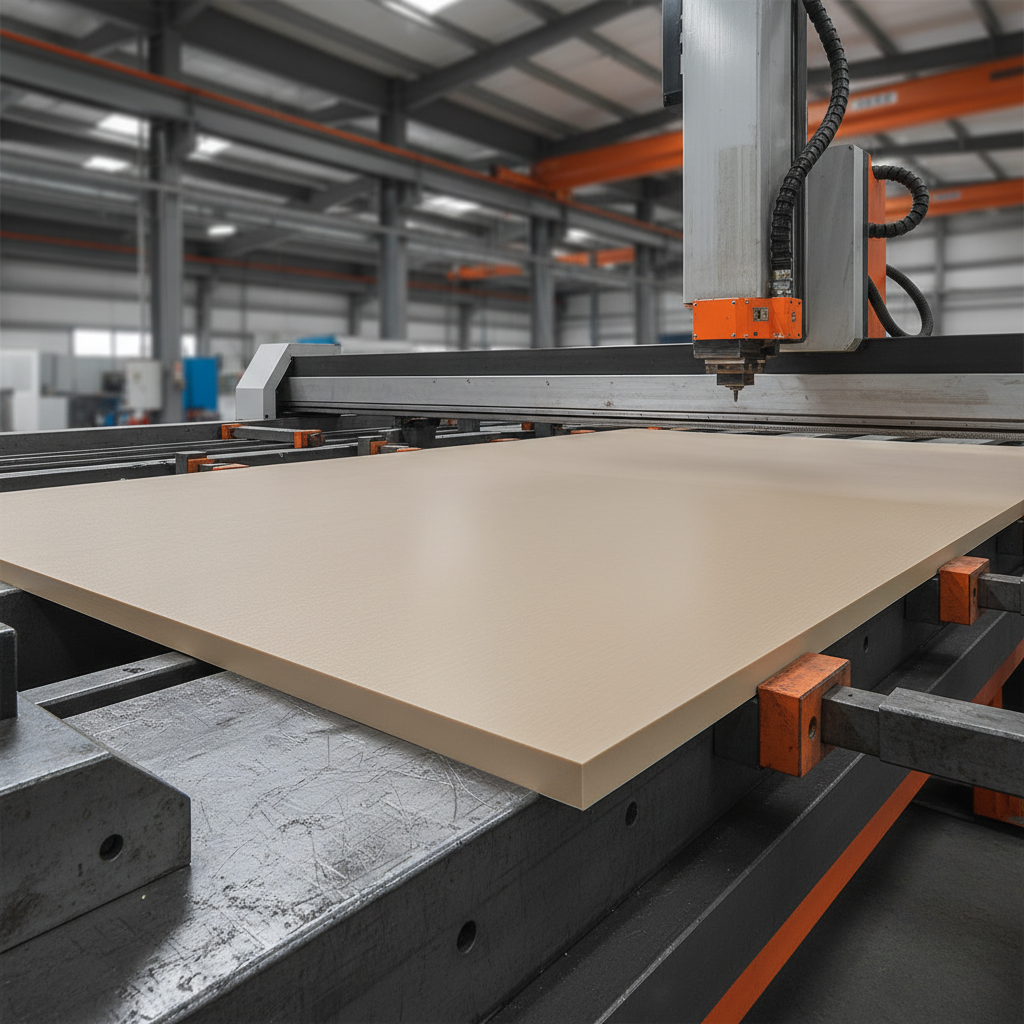
The manufacturing of plastic sheets has evolved from basic extrusion to high-precision systems capable of producing multi-layered structures. Modern facilities, like those operated by Baoding Lida Plastic Industry Co., Ltd., employ advanced sheet facilities to ensure that thickness tolerances are kept to a minimum, which is vital for precision engineering applications.
A significant trend in the industry is the development of specialized additives. For instance, while standard HDPE is excellent for many uses, there is a growing demand for fire-retardant versions in electrical engineering and ventilation systems. This is often achieved by incorporating flame-retardant masterbatches that meet international standards such as UL94, reducing the risk of fire propagation in industrial installations.
Furthermore, the industry is shifting toward circular economy models. The ability to recycle HDPE sheets without significant loss of mechanical properties makes them an attractive option for companies aiming to reduce their carbon footprint and meet sustainability certifications.
Choosing between different plastic sheets often involves a series of technical trade-offs. For example, if an application requires extreme temperature resistance, PVC or PP might be considered, but the user may lose the impact toughness provided by HDPE. The decision must be based on the primary failure mode the project aims to avoid.
When you buy hdpe sheet, you are selecting a material that prioritizes durability and chemical inertness over thermal rigidity. This makes it the correct choice for subterranean liners but potentially the wrong choice for high-heat engine components.
To assist in this decision-making process, the table below provides a comparison of common thermoplastics based on typical industrial requirements and their relative suitability.
| Material | Chemical Resistance | Impact Toughness | Thermal Limit | Primary Use Case |
|---|---|---|---|---|
| HDPE | Excellent | High | Moderate | Containment Liners |
| PP (Standard) | Good | Moderate | High | Chemical Tanks |
| PP (FR Grade) | Good | Moderate | High | Electrical Ducting |
| PVC Rigid | Moderate | Moderate | Moderate | Construction Pipes |
| CPVC | High | Moderate | Very High | Hot Water Systems |
| PVC Soft | Moderate | High | Low | Flexible Seals |
The primary difference lies in the density and temperature tolerance. HDPE offers superior impact strength and better performance in cold environments, making it ideal for outdoor liners and pipes. Polypropylene (PP) generally has a higher melting point and better heat deflection, which makes it more suitable for high-temperature chemical processing where structural rigidity at heat is required.
UV stabilization is achieved by adding carbon black or other UV-absorbing stabilizers during the extrusion process. When procuring, you should request a technical data sheet (TDS) that specifies the UV resistance rating and the type of stabilizer used. Sheets without these additives will eventually undergo photo-oxidation, leading to surface cracking and loss of mechanical strength.
Thermal welding is the industry standard for creating permanent, leak-proof bonds in HDPE. This can be done via hot-gas welding using matching HDPE welding rods or through extrusion welding for thicker sheets. Mechanical fastening is possible but creates potential leak points and stress concentrations, which may lead to cracking over time.
Yes, HDPE is widely used for potable water due to its non-toxic nature and resistance to corrosion. However, it is critical to ensure the material is food-grade and certified by relevant health authorities to ensure no harmful additives migrate into the water supply.
Chemical resistance is primarily a property of the polymer resin itself, not the thickness. However, thicker sheets provide a larger "sacrificial layer" and greater structural integrity against permeate diffusion. In high-pressure chemical environments, thickness is increased to prevent mechanical failure rather than to change the chemical compatibility of the material.
Environmental Stress Cracking (ESC) occurs when the material is simultaneously exposed to a tensile stress and a specific chemical agent (like certain detergents or alcohols). This can be mitigated by selecting high-molecular-weight resins and ensuring that the installation avoids sharp bends or overly tight fasteners that create localized stress points.
The utility of HDPE in modern industry is a result of its balance between cost, durability, and chemical inertness. Whether used in the form of sheets, pipes, or fittings, the material's success depends on the precision of its manufacture and the accuracy of its application.
For those looking to optimize their industrial infrastructure, the focus should remain on selecting materials based on verified technical parameters rather than generic specifications. By aligning material properties with environmental demands, enterprises can significantly extend the lifecycle of their assets and reduce long-term maintenance costs.