

Sep . 10, 2025 10:40 Back to list
Durable UPVC Chemical Pipe: Corrosion-Resistant Industrial Solutions
Advanced Solutions in Chemical Transport: Industry Trends and Innovations
The global industrial landscape, particularly sectors dealing with aggressive chemical media, is undergoing a significant transformation. Driven by stringent environmental regulations, a demand for enhanced operational safety, and the imperative for cost-effectiveness, material science in fluid conveyance systems is constantly evolving. In this context, Unplasticized Polyvinyl Chloride (UPVC) emerges as a robust and reliable solution. Specifically, the UPVC chemical pipe has cemented its position as a critical component in various industrial applications due to its exceptional resistance to a wide array of chemicals, superior mechanical properties, and extended service life.
Current industry trends highlight a shift towards more sustainable and durable piping solutions. Manufacturers are increasingly focusing on materials that offer not only chemical inertness but also ease of installation, reduced maintenance, and a lower environmental footprint throughout their lifecycle. UPVC chemical pipe systems align perfectly with these trends, providing an eco-friendly alternative to traditional metallic piping which often succumbs to corrosion in harsh chemical environments, leading to costly failures and safety hazards. The market for industrial plastics, including UPVC, is projected to grow significantly, with a CAGR estimated around 5-7% over the next five years, fueled by expansion in chemical processing, water treatment, and mining industries.
Innovations in UPVC formulation continue to improve its performance envelope, expanding its applicability to even more demanding scenarios. This includes advancements in UV stabilization for outdoor use, enhanced impact resistance, and improved pressure ratings. These continuous developments ensure that UPVC chemical pipe remains at the forefront of safe and efficient chemical fluid management.
Technical Specifications of UPVC Chemical Pipes
Understanding the precise technical specifications of UPVC chemical pipe is crucial for ensuring optimal system design and operational integrity. UPVC is an unplasticized form of PVC, meaning it lacks the phthalate plasticizers found in flexible PVC, making it more rigid, robust, and chemically resistant.
Key parameters include:
- Material Composition: Primarily polyvinyl chloride resin, stabilized with heat stabilizers and UV inhibitors. No plasticizers, ensuring rigidity and chemical inertness.
- Pressure Rating: Typically manufactured to international standards like ISO 1452 or ASTM D1785, with pressure nominals (PN) ranging from PN6 to PN16 (6 to 16 bar) at 20°C, depending on wall thickness and diameter. Pressure ratings decrease with increasing temperature.
- Temperature Range: Optimal operating temperatures are generally between 0°C and 60°C. While UPVC can withstand brief excursions beyond these limits, sustained operation outside this range can affect its mechanical properties and chemical resistance. For every 10°C increase above 20°C, the pressure rating typically decreases by approximately 10-15%.
- Chemical Resistance: Excellent resistance to acids, alkalis, salts, and various organic solvents. This makes it ideal for handling corrosive fluids such as sulfuric acid, hydrochloric acid, sodium hydroxide, and brine solutions. Comprehensive chemical resistance charts are essential for specific applications.
- Impact Strength: While rigid, UPVC offers good impact resistance, especially at ambient temperatures, though it can become more brittle at very low temperatures.
- Thermal Conductivity: Low thermal conductivity (approximately 0.16 W/m·K) means it provides excellent insulation properties, reducing heat loss or gain in fluid transfer.
- Coefficient of Linear Thermal Expansion: Approximately 6 x 10⁻⁵ m/m/°C, which needs to be accounted for in long pipeline designs to manage thermal expansion and contraction.
Product Specification Table (Example for UPVC Pressure Pipe)
These specifications underscore the suitability of UPVC chemical pipe for demanding industrial environments where reliability and resistance to degradation are paramount. Adherence to international testing standards like ISO and ASTM ensures consistent quality and performance across various manufacturers.
Detailed Manufacturing Process Flow of UPVC Chemical Pipes
The manufacturing of UPVC chemical pipe is a highly controlled extrusion process designed to ensure product consistency, dimensional accuracy, and superior material properties. This process relies on high-quality UPVC resin compounds and adherence to strict quality control protocols.
Step 1: Raw Material Preparation
High-grade UPVC resin is blended with stabilizers (e.g., calcium-zinc or tin-based), lubricants, and pigments in precise proportions. This ensures thermal stability during processing and desired physical properties in the final product. Strict control over material purity is maintained.
Step 2: Extrusion
The blended compound is fed into a twin-screw extruder. Heat and shear forces within the extruder melt the UPVC compound into a viscous, homogenous melt. This melt is then forced through a precision die, which shapes it into a continuous pipe profile.
Step 3: Sizing and Cooling
Immediately after extrusion, the hot pipe enters a vacuum calibration tank where external vacuum pressure ensures precise outer diameter. Simultaneously, cooling water sprays rapidly cool and solidify the pipe, maintaining its dimensional stability. Internal sizing mandrels might also be used.
Step 4: Haul-off and Cutting
A haul-off unit gently pulls the pipe through the cooling tanks at a consistent speed, preventing distortion. Once fully cooled and solidified, an automatic cutting saw cuts the continuous pipe into predetermined lengths, typically 6 meters, with clean and precise cuts.
Step 5: End Finishing and Marking
Pipe ends may undergo chamfering or belling (socketing) for specific jointing methods. Each pipe is then marked with essential information including nominal size, pressure rating, material type, date of manufacture, and relevant standards (e.g., ISO 1452, ANSI/ASTM D1785), ensuring traceability and compliance.
Step 6: Quality Control & Testing
Rigorous testing is performed throughout and after the manufacturing process. This includes dimensional checks (OD, ID, wall thickness), tensile strength tests, impact resistance tests, hydrostatic pressure tests, and reversion tests. Adherence to standards like ISO, ASTM, and DIN ensures the quality and service life of the UPVC chemical pipe. A typical service life, when properly installed and operated within specifications, exceeds 50 years.
This meticulous process ensures that each UPVC chemical pipe offers excellent corrosion resistance, making it an energy-saving choice due to its smooth bore which minimizes friction losses, thus reducing pumping energy requirements in systems for industries such as petrochemicals, metallurgy, and water supply & drainage.
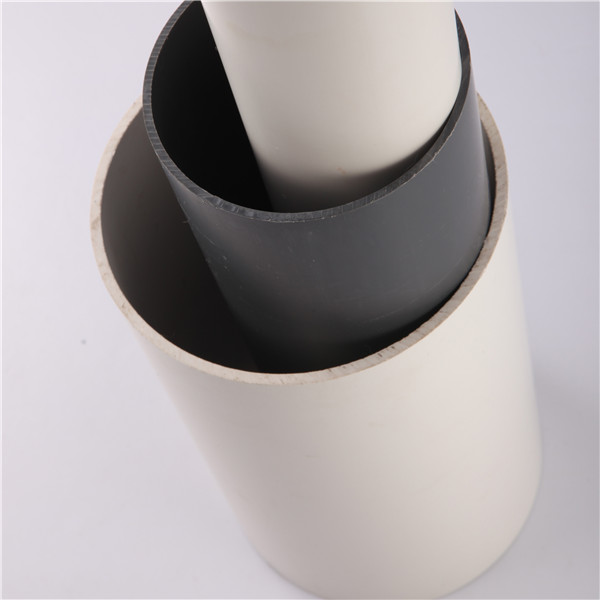
Image: High-quality UPVC chemical pipe extrusion line.
Technical Advantages and Application Scenarios
Technical Advantages
- Exceptional Corrosion Resistance: UPVC is virtually immune to galvanic and electrolytic corrosion, and resistant to a broad spectrum of acids, alkalis, and salts. This is a critical advantage over metallic piping in chemical handling.
- Long Service Life: With high resistance to chemical degradation and minimal scaling, UPVC pipes boast a service life often exceeding 50 years, significantly reducing replacement and maintenance costs.
- Smooth Bore: The exceptionally smooth internal surface (Hazen-Williams C-factor of 150) reduces fluid friction, minimizes pressure drop, and prevents biological growth (biofouling), contributing to energy savings and maintaining flow efficiency.
- Lightweight and Easy Installation: UPVC pipes are considerably lighter than metal pipes, simplifying handling, transport, and installation, thereby reducing labor costs and installation time. They are easily joined using solvent cement or threaded connections.
- Cost-Effectiveness: Lower material costs, reduced installation expenses, and minimal maintenance requirements result in a significantly lower total cost of ownership compared to many alternative materials.
- Non-Toxic and Safe: When manufactured to appropriate standards (e.g., NSF/ANSI 61), UPVC is suitable for potable water and food-grade applications, though for chemical applications, specific chemical compatibility must be verified.
Application Scenarios
The robust characteristics of UPVC chemical pipe make it indispensable across diverse industrial sectors:
- Chemical Processing Plants: Ideal for conveying concentrated acids (e.g., sulfuric acid up to 70%, hydrochloric acid), alkalis (e.g., sodium hydroxide), and other aggressive chemical reagents where corrosion resistance is paramount. Used in transfer lines, dosing systems, and effluent treatment.
- Water Treatment and Purification: Essential for handling corrosive chemicals like chlorine, coagulants, and flocculants used in municipal and industrial water treatment facilities, desalination plants, and demineralized water systems.
- Metallurgy and Mining: Employed in processes involving acid leaching, conveying highly abrasive slurries (when specified for abrasion resistance), and managing corrosive wastewater streams from ore processing.
- Pharmaceutical and Food & Beverage: While primarily known for chemical resistance, certain grades are used in non-potable water, utility lines, and waste streams where chemical sanitizers or cleaning agents are routinely used.
- Pulp and Paper Industry: For transporting process chemicals, bleaching agents, and effluent streams that are often highly corrosive.
- Waste Water and Drainage Systems: Due to its resistance to sewage gases, corrosive industrial effluents, and abrasives, UPVC is extensively used in gravity and pressure sewer systems, industrial drainage, and vent lines.
- Aquaculture: Used in freshwater and saltwater systems for its non-corrosive properties, ensuring the integrity of the water for marine life.
Image: UPVC chemical pipe systems in a processing plant.
Vendor Comparison and Customized Solutions
Vendor Comparison: Key Differentiators
Selecting the right supplier for UPVC chemical pipe is critical for project success. While many vendors offer UPVC products, differentiation often lies in material quality, manufacturing precision, adherence to international standards, customer support, and value-added services.
Customized Solutions for UPVC Chemical Piping
Recognizing that no two industrial applications are identical, leading manufacturers offer bespoke solutions for UPVC chemical pipe systems. These customizations ensure optimal performance and integration within complex infrastructure.
- Tailored Dimensions: Pipes can be supplied in specific lengths to minimize waste and jointing on-site. Custom diameters and wall thicknesses can be engineered for unique pressure and flow requirements.
- Specialized Formulations: While standard UPVC offers broad resistance, certain applications might benefit from enhanced UV stabilization for prolonged outdoor exposure, improved impact modifiers for high-stress environments, or specific chemical resistance additives.
- Integrated Fabrications: Pre-fabricated spool pieces, manifold assemblies, and complex bends can be manufactured off-site. This significantly reduces installation time and improves weld quality in the field.
- Color Coding: Custom colors can be incorporated for easy identification of different process lines (e.g., acid, alkali, wastewater) in large industrial facilities, enhancing safety and maintenance efficiency.
- Jointing Solutions: Offering a range of joining methods beyond standard solvent cement, such as threaded ends for easy disassembly or flanged connections for higher pressure and larger diameters.
- System Design Support: Providing comprehensive design assistance, including stress analysis, hydraulic calculations, and bill of materials generation, ensuring the entire UPVC system is optimized for performance and longevity.
These customized solutions, coupled with robust product offerings, underscore the commitment of reputable vendors to deliver high-performance, long-lasting UPVC chemical pipe systems that meet specific project demands.
Application Case Studies: Real-World Performance
The proven track record of UPVC chemical pipe in challenging environments is best demonstrated through real-world application case studies, highlighting its reliability and cost-effectiveness.
Case Study 1: Acid Transfer in a Semiconductor Manufacturing Plant
Challenge: A leading semiconductor manufacturer faced recurring corrosion issues with stainless steel piping used for dilute sulfuric acid and deionized water lines in their etching and cleaning processes. Frequent leaks led to costly downtime and increased safety risks.
Solution: The entire system was retrofitted with UPVC chemical pipes (DN50 to DN100, PN10) and compatible fittings. The smooth interior surface of the UPVC pipes also significantly reduced particulate accumulation, critical for semiconductor purity standards.
Results: Over a five-year period, the UPVC system demonstrated zero leaks attributed to chemical corrosion. Operational uptime improved by 15%, and maintenance costs for piping were reduced by 40%. The client reported enhanced safety and consistent fluid purity.
Client Feedback: "The switch to UPVC was a game-changer. Our previous metal pipes were a constant headache. Now, we have peace of mind knowing our chemical transfer lines are secure and reliable."
Case Study 2: Brine Conveyance in a Desalination Plant
Challenge: A large-scale reverse osmosis (RO) desalination plant required robust piping for conveying highly corrosive brine concentrate. The existing carbon steel pipes suffered from rapid internal corrosion and scaling, leading to frequent section replacements.
Solution: High-pressure UPVC chemical pipe (DN200, PN16) was selected for the primary brine discharge lines. Its inherent resistance to saline solutions and biofouling made it an ideal choice. Installation was expedited due to the lightweight nature of UPVC compared to heavy metal alternatives.
Results: After three years of continuous operation, visual inspections confirmed minimal scaling and no signs of corrosive degradation. The plant achieved a 20% reduction in pumping energy due to the smoother pipe interior compared to the scaled metal pipes, showcasing significant energy saving. Overall maintenance expenditures for the brine system dropped by 30%.
Service Case Detail: Our engineering team provided comprehensive support, including thermal expansion calculations for the long pipe runs and on-site training for the installation crew, ensuring proper solvent cement techniques for long-term joint integrity.
Image: Skilled technicians installing UPVC chemical pipes.
Authoritativeness and Trustworthiness
Establishing authority and trustworthiness is paramount in the B2B sector. Our commitment is reflected in our certifications, partnerships, and customer-centric policies.
Company & Product Certifications
- ISO 9001:2015 Certified: Demonstrates our adherence to internationally recognized quality management system standards.
- Compliance with International Standards: Our UPVC chemical pipe products conform to key standards such as ISO 1452, ASTM D1785, and DIN 8061/62, ensuring global applicability and reliability.
- Specific Product Certifications: Where applicable, products carry certifications such as WRAS (Water Regulations Advisory Scheme) for potable water applications, or compliance with FDA regulations for certain food-contact scenarios, depending on specific grade and application.
Trustworthiness: FAQ, Lead Time, Warranty, & Support
Frequently Asked Questions (FAQ)
Q: What is the maximum temperature for UPVC chemical pipes?
A: UPVC pipes are generally suitable for continuous operation up to 60°C (140°F). Above this, their pressure rating significantly reduces, and chemical resistance may be compromised. For higher temperatures, CPVC or other specialized plastics are recommended.
Q: Can UPVC pipes be used outdoors with exposure to sunlight?
A: Yes, our UPVC chemical pipe products contain UV stabilizers to resist degradation from sunlight. However, for prolonged direct exposure in intense UV environments, painting or shielding can further extend service life.
Q: What is the recommended joining method for UPVC chemical pipes?
A: Solvent cement welding is the most common and reliable method for joining UPVC pipes and fittings. Threaded connections are also used, especially for applications requiring periodic disassembly, with appropriate thread sealant.
Q: How do I ensure chemical compatibility for my specific application?
A: We provide comprehensive chemical resistance charts. For critical or unusual chemicals, our technical support team can offer guidance based on industry data and testing. Always consult the chemical resistance guide for specific concentrations and temperatures.
Lead Time & Fulfillment
Standard stock items of UPVC chemical pipe typically have a lead time of 1-2 weeks for dispatch, subject to order volume. For customized solutions or large project orders, lead times will be provided upon consultation and can range from 4-8 weeks, depending on complexity and production schedule. We operate with robust logistics partners to ensure timely and secure delivery globally.
Warranty Commitments
We stand by the quality of our products. All UPVC chemical pipe and fittings are covered by a standard 10-year warranty against manufacturing defects from the date of purchase, provided they are installed, used, and maintained in accordance with our guidelines and industry best practices. Specific project warranties may be negotiated for large-scale installations.
Customer Support
Our dedicated customer support team is available to assist with technical queries, product selection, order status, and after-sales service.
- Technical Helpline: +86-XXX-XXXX-XXXX (available Monday-Friday, 9:00 AM - 5:00 PM GMT+8)
- Email Support: sales@lidaplastic.com (response within 24 hours)
- Online Portal: Access to product documentation, installation guides, and chemical compatibility charts.
- On-site Support: Available for complex project consultations and large-scale installations by arrangement.
Citations
- International Organization for Standardization (ISO). (n.d.). ISO 1452: Plastics piping systems for water supply, and for buried and laid above ground drainage and sewerage under pressure — Unplasticized poly(vinyl chloride) (PVC-U).
- ASTM International. (n.d.). ASTM D1785: Standard Specification for Poly(Vinyl Chloride) (PVC) Plastic Pipe, Schedules 40, 80, and 120.
- Plastic Pipe Institute (PPI). (n.d.). Handbook of Polyethylene Pipe.
- Bühler, W., & Hess, M. (2018). Plastics in pipe construction: Manual of materials and applications. Carl Hanser Verlag GmbH & Co. KG.
-
Ultimate Guide to High Performance Industrial pvc dowel rods
NewsApr.16,2026
-
Industrial Guide to Using High Quality cpvc welding rod for Piping
NewsApr.09,2026
-
Comprehensive Guide to Selecting the Best Welding Rods for PVC Applications
NewsApr.07,2026
-
Comprehensive Guide to Solid PVC Rod Applications and Material Selection
NewsApr.04,2026
-
Comprehensive Guide to Choosing the Right Welding Rod PVC for Optimal Results
NewsMar.31,2026
-
Comprehensive Guide to 12mm HDPE Sheet Properties Applications and More
NewsMar.28,2026