

Sep . 11, 2025 09:40 Back to list
Durable PVC Square Rods - Corrosion-Resistant & Versatile
Introduction to PVC Square Rod and Industry Trends
In diverse industrial landscapes, the selection of high-performance materials is paramount for ensuring operational efficiency and long-term reliability. Among the most versatile and cost-effective solutions, the PVC square rod stands out as a critical component. This robust thermoplastic product, derived from Polyvinyl Chloride, offers an exceptional balance of mechanical strength, chemical resistance, and electrical insulation properties, making it indispensable across numerous B2B applications. Its inherent qualities provide a reliable alternative to traditional materials in challenging environments, driven by a growing demand for durable, low-maintenance, and economically viable solutions.
The global market for PVC products continues to experience steady growth, projected to exceed USD 80 billion by 2027, driven by increasing demand from construction, automotive, and industrial sectors. For square rod variants specifically, key market trends include a heightened focus on sustainability, with manufacturers exploring advanced recycling techniques and bio-based PVC formulations to align with circular economy principles. Furthermore, there is an ongoing push for enhanced performance characteristics, such as improved UV stability for outdoor applications and fire retardancy for safety-critical environments. Digitalization in manufacturing, including advanced extrusion process controls, is also contributing to higher precision and reduced material waste, catering to stringent industry requirements. The adoption of these advanced PVC solutions is expanding into new niches that demand materials with superior environmental resilience and a lower total cost of ownership compared to traditional metallic or less durable plastic alternatives, marking a significant shift in material specification across various engineering disciplines.
Detailed Manufacturing Process of PVC Square Rod
The production of a high-quality PVC square rod involves a sophisticated extrusion process, ensuring consistent material integrity and precise dimensional accuracy. This methodical approach adheres to rigorous quality control standards, such as ISO 9001:2015, to meet the exacting demands of industrial applications requiring reliable and consistent material properties.
Process Flow:
- Material Preparation and Compounding: The process begins with sourcing high-grade PVC resin (typically suspension PVC with a K-value between 65-68 for rigid applications). This resin is then precisely blended with a range of specialized additives in a high-speed mixer. These additives are critical for imparting the desired properties and include heat stabilizers (e.g., environmentally friendly Ca/Zn-based systems) to prevent degradation during processing, lubricants (both internal and external) for improved melt flow and surface finish, impact modifiers (such as CPE or MBS) to enhance toughness and reduce brittleness, processing aids to optimize extrusion, UV stabilizers for outdoor longevity, and pigments for specific color requirements. This meticulous compounding ensures a homogeneous mixture and the precise functional characteristics of the final rod.
- Extrusion: The compounded PVC material is fed into a twin-screw extruder. Inside, under carefully controlled heating zones (typically ranging from 160°C to 200°C) and the mechanical shear from the counter-rotating or co-rotating screws, the PVC softens and melts into a homogeneous, viscous mass. The twin-screw configuration is preferred for PVC due to its excellent mixing capability and ability to handle heat-sensitive materials, ensuring a consistent melt temperature and viscosity, which are paramount for producing uniform profiles.
- Die Forming: The molten PVC is then forced through a precisely engineered die with a square-shaped orifice. The design of this die is critical, with highly polished internal surfaces and precise geometry to ensure the accurate cross-sectional dimensions of the rod and a smooth, defect-free surface finish. Advanced die technology minimizes melt fracture and internal stresses, contributing to the rod's structural integrity.
- Vacuum Calibration and Cooling: Immediately upon exiting the die, the hot PVC profile enters a vacuum calibration tank. Here, a controlled vacuum is applied, drawing the molten material against cooled sizing sleeves. This process precisely forms and stabilizes the square dimensions, ensuring tight dimensional tolerances. Following calibration, the rod passes through multiple cooling tanks containing chilled water, which rapidly solidifies the PVC and prevents any further deformation, setting its final shape and dimensions.
- Haul-off and Cutting: A robust haul-off unit, typically comprising rubber traction belts or rollers, continuously and steadily pulls the now-solidified PVC rod at a constant speed from the cooling section. This controlled pulling action is essential for maintaining consistent dimensions throughout the rod's length. Further down the production line, an automatic cutting saw precisely cuts the continuous rod into predetermined lengths as per client specifications, minimizing material waste.
- Quality Control and Inspection: Stringent quality checks are implemented throughout the entire manufacturing process. This includes continuous real-time monitoring of melt temperature, pressure, and haul-off speed. Post-production, samples from each batch undergo comprehensive testing for dimensional accuracy (per ANSI B46.1 for surface finish and ISO 3302 for dimensional tolerances), mechanical properties (including tensile strength, impact resistance, and hardness per ASTM D638, D256, D2240 respectively), and visual inspection for any surface defects or inconsistencies. Only rods meeting these rigorous standards and internal quality benchmarks are approved for packaging and dispatch.
This meticulous process ensures that each PVC square rod exhibits superior performance, a prolonged service life of 20+ years in typical conditions, and suitability for demanding target industries such as petrochemical processing, metallurgy, and water supply & drainage systems. The advantages include significant corrosion resistance against a wide range of chemicals and the potential for energy savings due to its lower thermal conductivity compared to metals.
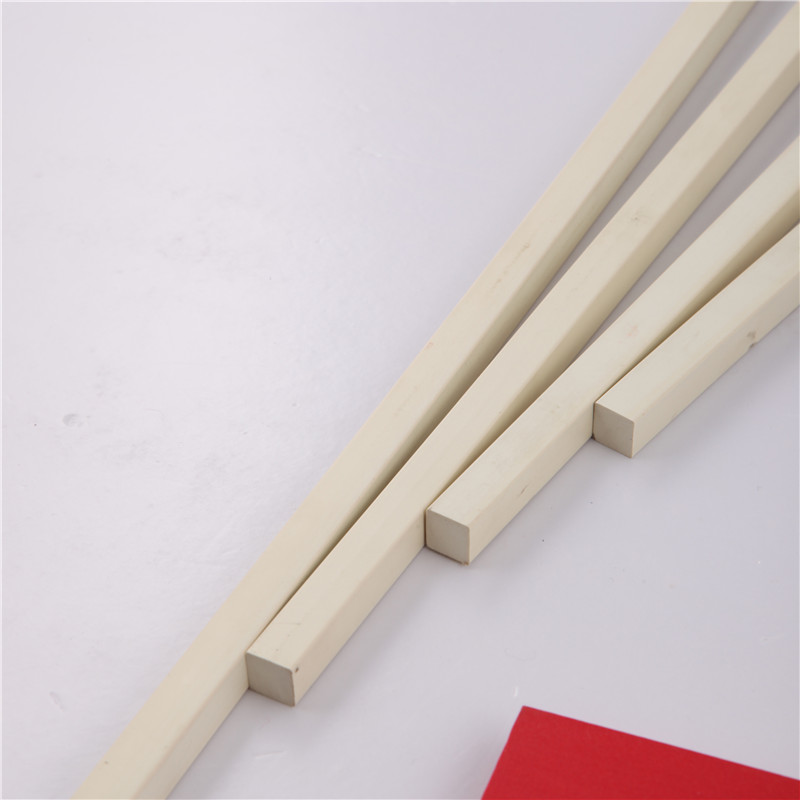
Precision-engineered PVC square rod during quality inspection.
Technical Specifications and Material Properties
The inherent properties of PVC make it an outstanding choice for structural and functional components where chemical inertness and electrical insulation are critical. Our PVC square rod is engineered to deliver consistent performance under various environmental and operational stresses. Below is a detailed overview of its typical technical specifications and material properties, developed to meet international standards like ASTM D1784 for rigid PVC compounds, ensuring reliability and compliance.
Typical Product Specification Table (Rigid PVC):
| Property | Unit | Value (Typical) | Test Standard |
|---|---|---|---|
| Density | g/cm³ | 1.38 - 1.45 | ASTM D792 |
| Tensile Strength | MPa | 45 - 55 | ASTM D638 |
| Flexural Modulus | GPa | 2.8 - 3.2 | ASTM D790 |
| Izod Impact Strength (Notched) | J/m | 20 - 40 | ASTM D256 |
| Hardness (Shore D) | - | 75 - 85 | ASTM D2240 |
| Vicat Softening Point | °C | 75 - 85 | ASTM D1525 |
| Thermal Conductivity | W/(m·K) | 0.14 - 0.16 | ASTM C177 |
| Volume Resistivity | Ω·cm | >1014 | ASTM D257 |
| Dielectric Strength | kV/mm | >20 | ASTM D149 |
These meticulously controlled properties underscore the suitability of the PVC square rod for environments requiring excellent chemical stability, robust electrical insulation, and reliable mechanical performance at moderate temperatures. Its non-corrosive nature is particularly beneficial in aggressive chemical environments, consistently outperforming many metallic alternatives in terms of longevity and reduced maintenance requirements. The low thermal conductivity also presents opportunities for energy savings in certain applications by minimizing heat transfer.
Key Technical Advantages of PVC Square Rod
The strategic adoption of PVC square rod in industrial applications offers a multitude of technical and operational advantages that contribute significantly to project success, operational efficiency, and asset longevity. These benefits position it as a superior choice over traditional materials in many demanding environments.
- Exceptional Corrosion Resistance: Unlike common metals, PVC is inherently resistant to a vast spectrum of aggressive chemicals, including strong acids, alkalis, salts, and various organic solvents. This makes PVC square rods an ideal choice for use in chemical processing plants, wastewater treatment facilities, and marine environments where metal degradation due to rust or chemical attack is a pervasive and costly concern. This property directly translates to extended service life, reduced need for protective coatings, and significantly lower replacement and maintenance costs over the lifecycle of the installation.
- High Strength-to-Weight Ratio: While being substantially lighter than steel or aluminum, rigid PVC offers impressive mechanical strength and stiffness. This high strength-to-weight ratio enables the creation of lightweight yet robust structures, reducing overall dead load, simplifying handling and installation, and potentially lowering labor and transportation costs without compromising structural integrity for its intended application.
- Superior Electrical Insulation: PVC possesses excellent dielectric properties, rendering it an outstanding electrical insulator. This characteristic is crucial for applications in electrical infrastructure, providing safety, preventing current leakage, and acting as a reliable barrier in high-voltage environments. It is highly suitable for cable management systems, electrical panel components, protective housings, and insulating spacers.
- Low Thermal Conductivity: With a thermal conductivity significantly lower than most metals, PVC acts as an effective thermal insulator. In certain applications, such as framing for refrigerated display cases or supports within temperature-controlled storage, this property can contribute to tangible energy savings by minimizing heat transfer and maintaining stable internal temperatures more efficiently.
- Durability and Longevity: Properly formulated and extruded PVC square rods are highly durable, exhibiting excellent resistance to abrasion, impact, and general weathering. When equipped with appropriate UV stabilizers, they maintain their mechanical properties and aesthetic integrity even under prolonged outdoor exposure, guaranteeing a long service life with minimal degradation or maintenance, often exceeding 20-30 years in favorable conditions.
- Cost-Effectiveness: Beyond its initial competitive purchase price, the long-term economic benefits of PVC are substantial. Reduced maintenance requirements, extended service life, and ease of installation contribute to a significantly lower total cost of ownership compared to materials that necessitate frequent repair, replacement, or specialized protective measures in corrosive or demanding settings.
- Ease of Fabrication: PVC rods can be easily cut, drilled, routed, welded, and bonded using standard tools and techniques common in metal or woodworking shops. This versatility in fabrication allows for rapid prototyping, efficient on-site adjustments, and seamless integration into complex assemblies, thereby reducing project timelines and overall complexity.
Application Scenarios and Target Industries
The versatility and robust properties of PVC square rod make it an indispensable material across a broad spectrum of industries requiring durable, chemically resistant, and electrically insulating components. Its adaptability allows for crucial roles in both structural and functional applications.
- Petrochemical and Chemical Processing: PVC square rods are extensively used for support structures, tank linings, valve components, fume hoods, scrubbers, and chemical conduits. Their unparalleled chemical inertness prevents material degradation and avoids contamination of process fluids, ensuring operational safety and product purity even when exposed to highly aggressive acids, bases, and solvents.
- Water Supply & Drainage Systems: In municipal and industrial water treatment plants, PVC square rods are employed in the construction of filter press components, grating supports, baffle walls, and various structural elements. Its exceptional resistance to water, disinfectants (like chlorine), and common impurities, coupled with its non-toxic properties (for appropriate grades), ensures system longevity and compliance with potable water standards.
- Electrical and Electronics: Due to its superior dielectric strength and inherent flame-retardant properties, PVC square rods are ideal for use as bus bar supports, electrical insulators, cable management systems, switchgear components, and protective housings. They enhance safety, prevent electrical shorts, and ensure the reliable operation of critical electrical infrastructure.
- Construction and Infrastructure: In construction, these rods are utilized for non-load-bearing architectural elements, spacers, expansion joints, infill panels, and as structural components in environments prone to corrosion or where lightweight solutions are advantageous. Its weather resistance and ability to be formulated with UV stabilizers make it suitable for prolonged outdoor exposure, for example, in window and door frame reinforcements.
- General Industrial Manufacturing: Within diverse manufacturing operations, PVC square rods find application in custom machine parts, jigs, fixtures, wear strips, guiding rails, and conveyor system components. They serve as an effective and economical replacement for metals in situations where corrosion, weight, or electrical conductivity are problematic, offering good impact resistance and dimensional stability.
- Marine and Coastal Applications: Given its exceptional resistance to saltwater, UV radiation, and biological growth, PVC square rods are frequently specified for marine applications such as dock fendering, boat construction components, navigational aids, and outdoor signage supports, where harsh environmental factors would rapidly degrade other materials.
In each of these critical sectors, the ability of PVC solutions to perform consistently under challenging conditions, coupled with its robust technical profile and economic benefits, makes it a preferred material choice for discerning engineers and procurement managers seeking long-term reliability and performance.
Vendor Comparison and Selection Criteria
Selecting the right supplier for PVC square rod is a critical decision that impacts product quality, project timelines, and overall cost-efficiency. B2B purchasers must evaluate vendors based on several key criteria to ensure long-term value, reliability, and technical alignment with project specifications.
Key Vendor Comparison Factors:
- Product Quality & Certifications: A reputable vendor will adhere to international quality management systems (e.g., ISO 9001:2015) and ensure their products are rigorously tested against relevant material standards (e.g., ASTM, DIN). Look for verifiable data on material consistency, dimensional accuracy, mechanical properties, and compliance with environmental regulations (e.g., RoHS).
- Customization Capabilities: Assess the vendor's ability to provide specific dimensions, unique colors, or specialized material formulations (e.g., enhanced UV-stabilized, specific fire-retardant grades, high-impact compounds) to precisely meet unique project requirements. This flexibility can significantly reduce subsequent fabrication costs and lead times.
- Lead Time & Reliability: Understand the vendor's typical lead times for both standard stock orders and custom manufacturing. A proven track record of on-time delivery, efficient logistics, and transparent communication regarding production schedules and potential delays is crucial for project planning.
- Technical Support & Expertise: Evaluate the availability and expertise of their technical support team. A vendor with deep product knowledge, engineering support, and the capacity to assist with material selection, application design, and troubleshooting adds significant value, especially for complex or novel applications.
- Pricing Structure & Value Proposition: Beyond the unit price, consider the total cost of ownership. This includes factors such as product durability, warranty terms, ease of installation, and anticipated maintenance over the product's lifespan. A slightly higher initial investment might yield significant long-term savings and superior performance.
- Customer References & Reputation: Seek out testimonials, detailed case studies, or direct references from other B2B clients in similar industries to gauge the vendor's reputation for product quality, service reliability, and overall customer satisfaction.
Illustrative Vendor Comparison Table:
| Feature/Vendor | Vendor A (Premium) | Vendor B (Standard) | Vendor C (Budget) |
|---|---|---|---|
| Certifications | ISO 9001, ASTM, RoHS, REACH | ISO 9001 | Basic Internal QA |
| Customization | Extensive (dims, colors, compounds, machining) | Limited (dims, standard colors, basic fabrication) | Minimal (standard sizes only, no custom compounds) |
| Avg. Lead Time | 2-3 Weeks | 3-5 Weeks | 4-6 Weeks (less reliable) |
| Technical Support | Dedicated Senior Engineer, R&D Consulting | General Customer Service, Basic Product Info | Limited (Email Support) |
| Price Point | Higher (Value-driven) | Moderate (Cost-efficient) | Lower (Price-focused) |
A careful evaluation based on these parameters ensures that the chosen supplier for PVC square rod aligns perfectly with specific project requirements, budget constraints, and long-term operational goals, mitigating risks and maximizing return on investment.
Customized Solutions for Specialized Applications
While standard PVC square rod products cater to a wide range of applications, many B2B projects demand tailored solutions to achieve optimal performance, seamless integration, and compliance with niche industry standards. Leading manufacturers recognize this need and offer extensive customization options, transforming standard products into perfectly optimized components.
- Custom Dimensions and Tolerances: Beyond standard sizes, rods can be precisely extruded to unique square cross-sections and specific lengths, significantly minimizing material waste and eliminating the need for additional machining on-site for specific structural or fitting requirements. Tighter tolerances than typically found in industry standards can be achieved for highly sensitive applications, such as those in precision instrumentation or intricate assemblies.
- Specialized Material Formulations:
- — Enhanced UV Stabilization: For products intended for prolonged outdoor exposure in harsh climates, specific additive packages can be incorporated to significantly enhance resistance to degradation from ultraviolet radiation, preventing premature embrittlement, cracking, and discoloration, ensuring long-term aesthetic and mechanical integrity.
- — Advanced Fire Retardancy: Tailored additive packages can be integrated to achieve specific fire safety standards (e.g., UL 94 V-0, NFPA 130) for applications in electrical enclosures, public transportation, or building materials, where fire safety is paramount.
- — High Impact Resistance: Specialized impact modifiers (e.g., acrylic-based) can be meticulously blended into the PVC compound to significantly improve the material's toughness and resistance to sudden impacts, which is crucial for components operating in dynamic environments or those susceptible to accidental damage.
- — Specific Chemical Resistance: By carefully adjusting the PVC compound, it can be optimized to resist particular aggressive chemicals or solvents beyond its standard capabilities, extending its applicability in highly specialized chemical processing industries.
- Precision Color Matching: Custom pigments can be precisely incorporated during the compounding process to match specific brand guidelines, comply with aesthetic requirements, or for critical color-coding in complex industrial systems, improving visual identification and safety protocols.
- Specialized Surface Finishes: Options for various surface textures, from ultra-smooth (for low-friction applications or aesthetic appeal) to slightly textured (for improved grip or reduced reflectivity), can be provided to meet specific functional or aesthetic demands of an application.
- Secondary Machining and Fabrication: Beyond the extrusion process, advanced manufacturers can offer comprehensive secondary services such as CNC machining, drilling, routing, welding, and bonding. This allows for the creation of complex parts or assemblies directly from the basic rod stock, delivering a fully finished, ready-to-integrate component, which streamlines the client's production pipeline.
By partnering with a manufacturer capable of delivering these extensive customized solutions, businesses can ensure their PVC square rod components are perfectly optimized for their unique operational challenges, leading to enhanced performance, reduced installation time, increased project value, and a stronger competitive edge in their respective markets.
Real-World Application Case Studies
The practical benefits of PVC square rod are best illustrated through its successful deployment in challenging industrial scenarios. These real-world case studies highlight its reliability, cost-effectiveness, and adaptability in various demanding applications.
Case Study 1: Chemical Plant Tank Supports
A major chemical processing facility in the Gulf Coast region faced persistent issues with the structural integrity of their steel tank supports. These supports rapidly corroded due to continuous exposure to aggressive hydrochloric acid fumes and frequent caustic spills. The maintenance team reported annual replacement cycles and high labor costs. After evaluating various high-performance polymers, they transitioned to custom-fabricated supports made from PVC square rod. The project involved rods with specific dimensions (e.g., 50mm x 50mm) and a highly chemical-resistant formulation tailored for extreme acid exposure.
- Outcome: The PVC supports demonstrated complete immunity to the corrosive environment, showing no signs of degradation after five years of operation, significantly exceeding the lifespan of previous materials. This eliminated the need for frequent replacements and extensive maintenance, resulting in a projected 70% reduction in maintenance costs over a 10-year period and significantly improved worker safety by reducing exposure to hazardous conditions during repairs. Customer feedback highlighted the "unmatched durability in extreme chemical conditions and the robust engineering support provided during the transition."
Case Study 2: Municipal Water Treatment Plant Filter Grids
A large municipal water treatment plant required a highly durable and inert material for constructing internal filter grids. These grids needed to withstand continuous immersion in treated water containing mild disinfectants (chlorine, chloramine), resist bio-fouling, and maintain structural integrity for several decades without leaching contaminants into the potable water supply. Traditional wood or metallic alternatives were prone to rot, corrosion, or material degradation.
- Outcome: Precision-cut PVC square rod (specifically formulated for potable water contact) proved to be the ideal solution. Its inert nature prevented any leaching of undesirable substances into the water, ensuring compliance with strict public health standards. The inherent resistance of PVC to biological growth minimized the accumulation of algae and bacteria, drastically reducing the frequency and cost of maintenance and cleaning. The lightweight nature of the PVC components also facilitated easier and faster installation during a major plant upgrade, reducing downtime. The system has been operational for over 15 years with negligible signs of degradation, underscoring the product's long-term reliability and low lifecycle cost.
Case Study 3: Electrical Enclosure Spacers for Industrial Control Panels
An industrial electrical equipment manufacturer, specializing in high-voltage control panels for manufacturing automation, sought a non-conductive, high-strength, and fire-retardant material for internal spacers and supports within their complex control panel enclosures. The material needed to withstand elevated operating temperatures (up to 70°C) and comply with stringent electrical safety standards, including UL 94 V-0 for flame spread.
- Outcome: A customized fire-retardant grade of PVC square rod (specifically formulated to achieve UL 94 V-0 rating) was developed and supplied. Its excellent dielectric properties ensured superior electrical isolation between sensitive components, enhancing overall system safety and preventing potential short circuits. The enhanced fire safety profile met and exceeded all regulatory requirements, providing critical protection. Furthermore, the ease of machining PVC allowed the manufacturer to quickly and precisely produce complex spacer designs with intricate cut-outs and mounting holes, significantly streamlining their assembly process and reducing manufacturing lead times for their final products.
Frequently Asked Questions (FAQ)
Q1: What are the typical dimensions available for PVC square rods?
A1: We offer a comprehensive range of standard dimensions, typically from 10mm x 10mm up to 100mm x 100mm, with standard lengths of 1, 2, or 3 meters. For specialized applications, custom dimensions and lengths are readily available upon request to precisely meet specific project requirements and minimize material waste.
Q2: How does PVC square rod compare to other common industrial plastics like HDPE or PP in terms of mechanical strength and chemical resistance?
A2: Rigid PVC generally offers significantly higher tensile strength, flexural modulus, and overall stiffness compared to both HDPE (High-Density Polyethylene) and PP (Polypropylene). While all three plastics exhibit good chemical resistance, PVC is particularly noted for its superior resistance to a much broader spectrum of acids, alkalis, and many organic solvents, making it more suitable for aggressive chemical environments. HDPE and PP typically excel in extreme low-temperature impact strength and have slightly lower densities.
Q3: Can PVC square rods be reliably used in outdoor applications with prolonged sun exposure?
A3: Yes, absolutely. Our PVC square rods can be precisely formulated with advanced UV stabilizers during the compounding process. This ensures excellent resistance to degradation from prolonged sunlight exposure, allowing them to maintain their mechanical properties, dimensional stability, and aesthetic integrity for many years in outdoor applications, including marine and coastal environments where UV radiation is intense.
Q4: What is the typical lead time for a standard or customized order of PVC square rods?
A4: For standard stock items, our typical lead time for dispatch is generally 1-2 weeks. For customized dimensions, specialized material formulations, or large-volume orders, lead times usually range from 3-5 weeks, depending on the complexity of the manufacturing requirements and current production schedules. We always strive to provide precise lead times at the time of quotation and maintain transparent communication throughout the fulfillment process.
Q5: What kind of warranty do you offer on your PVC square rods, and what does it cover?
A5: We stand by the exceptional quality and durability of our products with a comprehensive 5-year warranty. This warranty specifically covers manufacturing defects, material flaws, and premature degradation under normal operating conditions and specified environmental exposures. Our commitment is to deliver products that consistently meet or exceed stringent industry standards. Full warranty terms and detailed conditions are available upon request from our sales or technical support teams.
Lead Time, Warranty, and After-Sales Support
At Lida Plastic, we prioritize clear communication, operational efficiency, and robust after-sales support to ensure complete client satisfaction, from the initial inquiry through to product installation and its entire operational lifespan. Our commitment extends beyond just delivering a product.
Lead Time and Fulfillment:
Our streamlined manufacturing processes and optimized supply chain enable us to offer highly competitive lead times. For standard PVC square rod products that are readily available in stock or require minimal processing, dispatch is typically completed within 7-10 business days. For customized dimensions, specialized material formulations, or larger volume orders, lead times generally range from 3-5 weeks, depending on the complexity of production requirements, tooling availability, and current factory load. We maintain substantial inventory levels of key raw materials and popular profiles to significantly expedite urgent requirements. Our dedicated logistics team works proactively with clients to ensure efficient and timely delivery, offering various shipping options, including expedited freight services when critical project schedules demand it. Transparency regarding order status and estimated delivery dates is a core part of our customer service promise.
Warranty Commitments:
Every PVC square rod supplied by Lida Plastic is backed by a comprehensive 5-year warranty. This warranty meticulously covers any material defects, manufacturing flaws, and premature degradation that may occur under normal operating conditions and within the specified environmental parameters. Our steadfast commitment to quality is reflected in this warranty, providing our clients with peace of mind and assurance in the long-term performance and durability of our products. This commitment is supported by our rigorous quality control procedures and adherence to international manufacturing standards. Detailed warranty terms and conditions are always available and can be provided upon request by our sales team.
Customer Support and Technical Assistance:
Our dedicated technical support team comprises highly experienced engineers and material scientists who are readily available to assist clients at every stage. This support extends from initial product selection and detailed application guidance to complex troubleshooting and the development of bespoke custom solutions. We provide expert advice on material compatibility, optimal installation practices, and performance optimization for specific industrial challenges. From the initial consultation to comprehensive post-purchase support, our overarching goal is to ensure seamless integration and optimal, reliable performance of our products within your critical operations. Clients can contact our dedicated support line or email us for prompt, professional, and knowledgeable assistance, ensuring that their projects remain on track and achieve their technical objectives.
Authoritative References
- 1. ASTM International. ASTM D1784 - Standard Specification for Rigid Poly(Vinyl Chloride) (PVC) Compounds and Chlorinated Poly(Vinyl Chloride) (CPVC) Compounds.
- 2. ISO (International Organization for Standardization). ISO 9001 - Quality management systems.
- 3. Plastics Europe. The Plastics Industry - An Overview. Available from: www.plasticseurope.org
- 4. Engineering.com. PVC (Polyvinyl Chloride). Available from: www.engineering.com/story/pvc-polyvinyl-chloride
- 5. Modern Plastics Encyclopedia. McGraw-Hill.
- 6. American National Standards Institute (ANSI). ANSI B46.1 - Surface Texture (Surface Roughness, Waviness, and Lay).
-
Ultimate Guide to High Performance Industrial pvc dowel rods
NewsApr.16,2026
-
Industrial Guide to Using High Quality cpvc welding rod for Piping
NewsApr.09,2026
-
Comprehensive Guide to Selecting the Best Welding Rods for PVC Applications
NewsApr.07,2026
-
Comprehensive Guide to Solid PVC Rod Applications and Material Selection
NewsApr.04,2026
-
Comprehensive Guide to Choosing the Right Welding Rod PVC for Optimal Results
NewsMar.31,2026
-
Comprehensive Guide to 12mm HDPE Sheet Properties Applications and More
NewsMar.28,2026