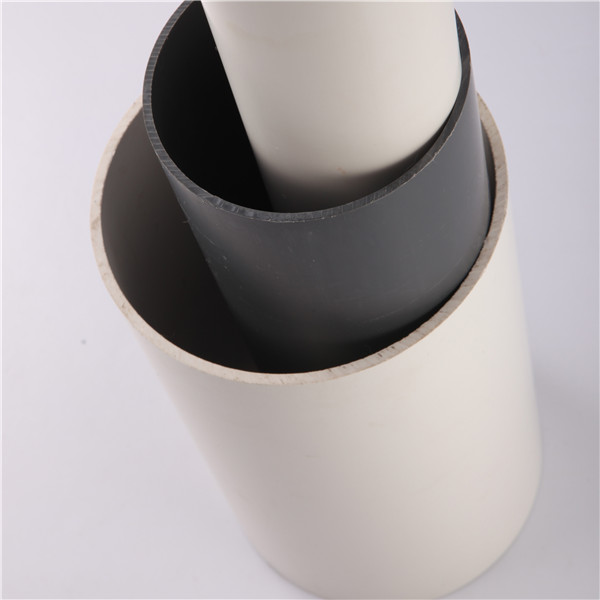
Industrial China PVC Rigid Sheet in Different Thickness for Engineering
Selecting the correct polymer substrate for industrial fabrication requires a precise balance of mechanical strength, chemical stability, and dimensional accuracy. Rigid PVC sheets serve as a cornerstone in modern engineering due to their exceptional versatility and robustness. Whether the requirement is for a thin, flexible barrier or a thick, load-bearing structural plate, the availability of various thicknesses allows engineers to optimize material usage without compromising structural integrity.
For sectors ranging from aerospace electronics to chemical processing, the ability to source a high-quality china pvc rigid sheet in different thickness ensures that specific operational demands—such as impact resistance or electrical insulation—are met exactly. By leveraging advanced extrusion technologies, these materials provide a reliable alternative to metals in corrosive environments, offering a lightweight yet durable solution for tanks, cladding, and precision milled components.

Engineering Properties of Rigid PVC and Their Technical Advantages
Rigid Polyvinyl Chloride (PVC) is engineered to withstand some of the most demanding industrial environments. Its primary value lies in its excellent corrosion resistance, making it nearly impervious to many acids, alkalis, and salts. This chemical inertness is critical for enterprises involved in wet smelting, such as those processing cobalt, nickel, or rare earth metals, where sulfuric and oxalic acids are commonly used.
Beyond chemical stability, the material exhibits high mechanical strength and impact resistance, ensuring that components do not deform under operational stress. Furthermore, the low flammability of the polymer provides an added layer of safety in electronic and electrical installations. From a fabrication perspective, these sheets are highly adaptable; they can be easily thermoformed, welded, or CNC-milled to create complex geometries for specialized equipment.
- Insulation Performance: Ideal for battery boxes and electrolytic tanks.
- Thermal Stability: Maintains structural integrity across a wide range of operating temperatures.
- Surface Quality: Available in glossy finishes to reduce contaminant adhesion and ease cleaning.

Industrial Application Scenarios and Material Integration
The deployment of rigid PVC is widespread due to its ability to replace more expensive or heavier materials. In the chemical industry, it is the preferred choice for constructing extraction tanks, storage vessels, and acid washing towers. Its non-reactive nature prevents contamination of the processed chemicals and extends the lifespan of the equipment compared to traditional metal alternatives.
In the realm of electronics and semiconductor processing, these sheets are utilized for etching equipment and plating barrels. The high dielectric strength makes them indispensable for electrical insulation plates and electrometer plates. Additionally, the architectural sector utilizes these materials for wall cladding in public utilities and office spaces, where durability and low maintenance are paramount.
Specialized applications also include the medical and food industries, where the material's ease of sterilization and non-toxic properties (when compliant with standards like RoHS and REACH) allow for the production of hygienic storage containers and laboratory equipment.
Customization and Precision Manufacturing Capabilities
Standard dimensions often fall short of specific project requirements. Therefore, the ability to provide tailored solutions is a critical value driver. Customization extends beyond mere size; it includes the provision of specific colors and surface treatments to match industrial branding or functional needs. For projects requiring widths exceeding 1500mm, specialized extrusion processes are employed to maintain thickness uniformity across the entire surface.
One of the most significant value-added services is the transition from raw sheets to milled parts. Utilizing advanced CNC milling centers, rigid PVC sheets can be transformed into high-precision components. By providing a construction drawing or sketch, clients can obtain tailor-made parts that meet exact tolerances, reducing the need for secondary processing on-site.
Quality assurance is maintained through rigorous certifications. Compliance with UL94 V0 grade ensures flame retardancy, while RoHS and REACH certifications guarantee that the materials are free from hazardous substances, meeting the stringent environmental regulations of the European Union and other global markets.
Technical Selection Guide for PVC Rigid Sheet Applications
| Application Type | Recommended Thickness | Primary Requirement | Surface Finish |
|---|---|---|---|
| Lab & Etching Equip. | Medium to High | Chemical Resistance | Glossy |
| Electrical Insulation | Variable | Dielectric Strength | Standard |
| Wall Cladding | Low to Medium | Impact Resistance | Glossy |
| Chemical Storage Tanks | High | Structural Load | Industrial |
| Precision Milled Parts | Custom | Dimensional Accuracy | Machined |
Supplier Evaluation and Procurement Considerations
When sourcing industrial plastics, buyers must look beyond the price per square meter. The consistency of the thickness is paramount; variations in gauge can lead to structural weaknesses or fitting failures in welded assemblies. A reputable manufacturer should have a documented quality management system, such as ISO9001, to ensure that every batch meets the specified tolerances.
Environmental and safety certifications are equally important. In the current regulatory climate, ensuring that a supplier holds ISO14001 for environmental management and provides RoHS/REACH certification is non-negotiable for companies exporting to international markets. These certifications provide the necessary trust that the material is safe for both the end-user and the environment.
Finally, after-sales support and technical consultation play a vital role. A supplier that offers technical support for thermoforming or CNC fabrication can help clients avoid costly mistakes during the implementation phase, ensuring that the selected thickness is appropriate for the intended mechanical load.
Future Trends in High-Performance Polymer Sheets
The industry is moving toward "intelligent materials" that combine the traditional benefits of PVC with enhanced functional additives. We are seeing an increase in demand for UV-stabilized rigid sheets that can withstand prolonged outdoor exposure without yellowing or becoming brittle. This is particularly relevant for farm irrigation and sea breeding projects where sunlight exposure is constant.
Another trend is the integration of recycled content without sacrificing physical properties. As global industries shift toward a circular economy, the development of high-performance recycled PVC sheets that maintain UL94 V0 flame ratings is becoming a priority for sustainable construction and automotive applications.
The shift toward automation in fabrication, specifically the rise of complex 3D CNC milling, means that the raw material must have higher homogeneity. Future developments will focus on increasing the purity of the resin to ensure that milled parts have a smoother finish and higher fatigue strength, further reducing the reliance on metal alloys in industrial design.
Frequently Asked Questions Regarding Rigid PVC Sheets
What are the primary benefits of using rigid PVC over other plastics?
Rigid PVC offers a superior combination of chemical resistance, high mechanical strength, and electrical insulation compared to many other polymers. It is particularly effective in highly corrosive environments where metals would fail, and it is more cost-effective than specialized fluoropolymers while providing similar resistance to many acids.
Can these sheets be customized to non-standard sizes and colors?
Yes, customization is available. We can supply various sizes, including widths exceeding 1500mm, and a range of colors beyond the standard options. Additionally, sheets can be cut-to-size to meet specific project requirements, reducing waste and processing time for the customer.
Is it possible to get precision parts directly from the sheets?
Absolutely. We utilize CNC milling centers to produce individual milled parts from our rigid PVC sheets. By providing a sketch or construction drawing and the required quantity, you can receive tailor-made components with high dimensional precision.
What certifications should I look for to ensure material safety?
For international industrial standards, you should look for ISO9001 (Quality Management), ISO14001 (Environmental Management), RoHS (Restriction of Hazardous Substances), and REACH (EU Chemicals Regulation). For fire safety, the UL94 V0 grade is the industry standard for flame retardancy.
How does thickness affect the application of the PVC sheet?
Thickness directly impacts the load-bearing capacity and impact resistance of the part. Thinner sheets are ideal for cladding, lining, and lightweight partitions, while thicker sheets are required for structural components like chemical storage tanks, battery boxes, and heavy-duty industrial plates.
Are these materials suitable for outdoor use in marine environments?
Rigid PVC is highly suitable for marine and sea breeding applications due to its excellent resistance to salt corrosion. However, for prolonged exposure to direct sunlight, it is recommended to specify UV-stabilized versions to prevent degradation over time.
Technical References and Industry Standards
- ISO 9001: Quality Management Systems Requirements
- European Chemicals Agency - REACH Regulation Overview
- UL Standards for Flammability and Safety Certification
- Plastics Industry Association Technical Resources
Whether you are designing a complex chemical processing plant or seeking durable insulation for electrical components, the right material choice is critical. We invite you to contact our technical team to discuss your specific thickness and dimension requirements to ensure the highest performance for your application.
Related Industrial Plastic Solutions